


Modular and serial product solutions to accelerate infrastructure expansion: Parliamentary State Secretary Ulrich Lange, Member of the Bundestag Susanne Hierl, and Josef Bauer, Deputy District Administrator of the Neumarkt District, visit the corporate group
August 8, 2025
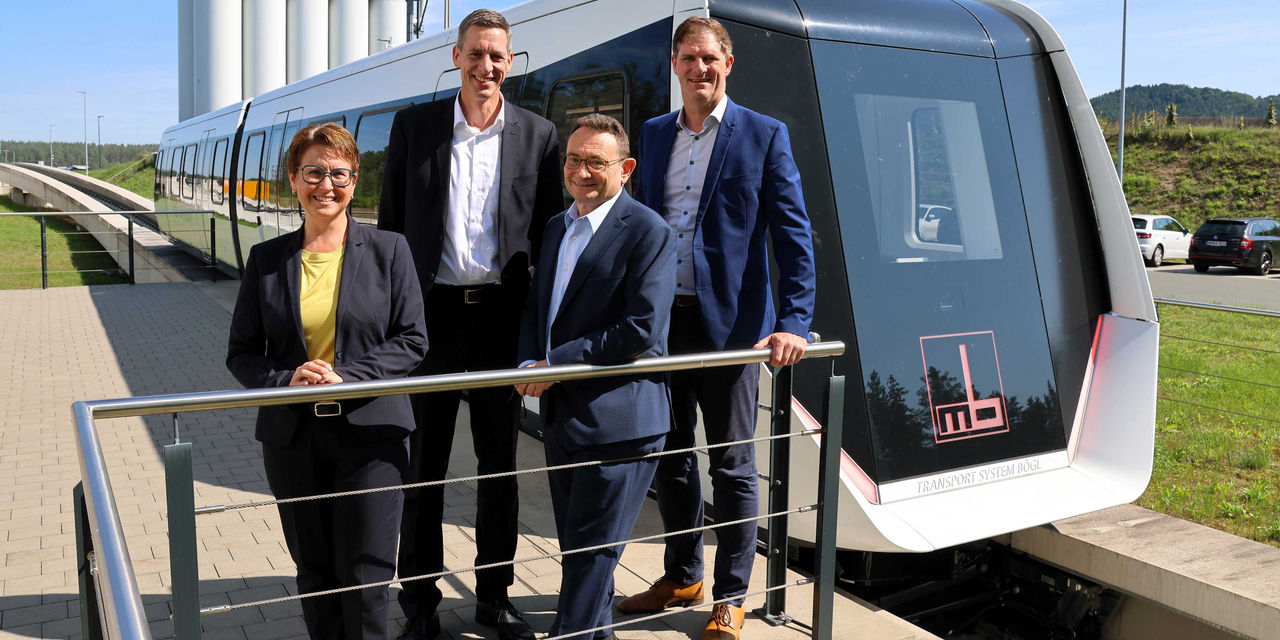
Shareholder and Supervisory Board Chairman Johann Bögl, along with CEO Stefan Bögl, welcomed the Parliamentary State Secretary at the Federal Ministry of Transport, Ulrich Lange, CSU Member of the Bundestag Susanne Hierl, and the Deputy District Administrator of the Neumarkt District, Josef Bauer, at the group’s headquarters in Sengenthal. The visit focused on the company’s innovative activities in the field of infrastructure construction, as well as a ride on the company’s own maglev train, the Transport System Bögl (TSB), which is considered a solution for the future of local public transportation.
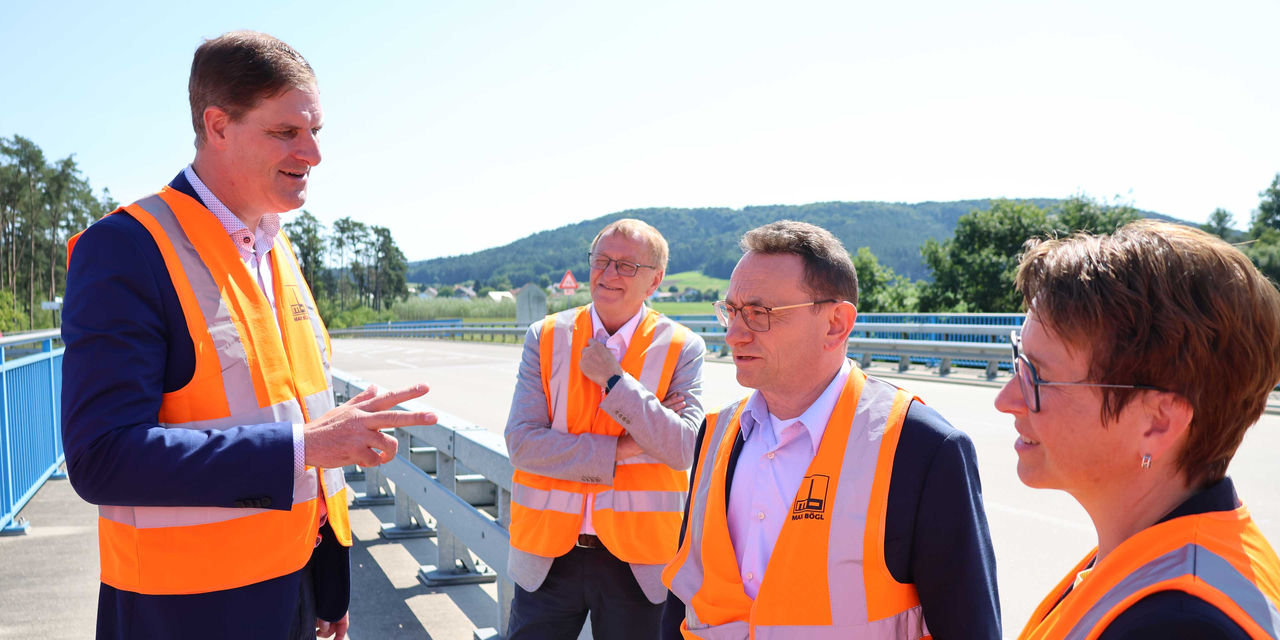
During a tour of the plant, the political guests learned about current projects in bridge, tunnel, and transportation infrastructure construction for rail and road systems. The focus was on the products developed by the company for modular bridge construction (the Modul Bridge Bögl) as well as the Hybrid Railway Bridge Bögl.
“The Modul Bridge Bögl and the Hybrid Railway Bridge Bögl represent fast, cost-effective, and high-quality bridge solutions. Thanks to industrial prefabrication and modular construction, they significantly shorten construction time, minimize traffic disruptions, and allow for flexible adaptation to different requirements,” explained CEO Stefan Bögl. The combination of concrete and steel ensures high load-bearing capacity and durability for the bridges—ideal for replacement projects and the modernization of Infrastructure with very short construction times.
There was also great interest in the TSB, whose deployment is currently being evaluated in several regions of Germany. The ride on the maglev train gave guests a hands-on impression of the system’s performance and comfort.
“We are very pleased about the interest in our work and the open dialogue with policymakers,” emphasized Johann Bögl. “Personal exchange is of great importance to us in order to jointly develop sustainable solutions for the challenges in the infrastructure, energy, and mobility sectors.”
During the tour of the plant, the guests gained insights into state-of-the-art manufacturing technologies, digital planning processes, and sustainable construction methods that distinguish Max Bögl as one of Germany’s leading construction companies.
The visit underscores the importance of the construction industry as a key sector for the renewal of Infrastructure and for the Mobility and Energy transitions in Germany. With its products and expertise, the Max Bögl Group sees itself as an active partner in implementing the tasks ahead.
Quote from State Secretary Lange: “The renewal of our infrastructure is a shared responsibility—of the federal government, the states, local governments, and technologically leading companies such as the Max Bögl Group. With the special fund, the resources are now available to bring about visible and tangible change. To achieve this, we need to pick up the pace—above all by accelerating planning and implementation. Bögl demonstrates how smart technology and pragmatic thinking can make our infrastructure fit for the future: Modular bridge systems allow for faster and more efficient construction. And with the Bögl Transport System, we’re witnessing an exciting innovative product.”
Quote from Member of the Bundestag Hierl: “It’s impressive to see the innovative power that lies within our local companies. To ensure these ideas can develop and be made generally available for Infrastructure use, we need greater flexibility in the bidding and proposal phases, as well as an amendment to public procurement law. Especially when it comes to renewing our infrastructure, we need to shift from ‘we’ve always done it this way’ to ‘how could this be done more efficiently and simply?’ Innovation is key to this.”
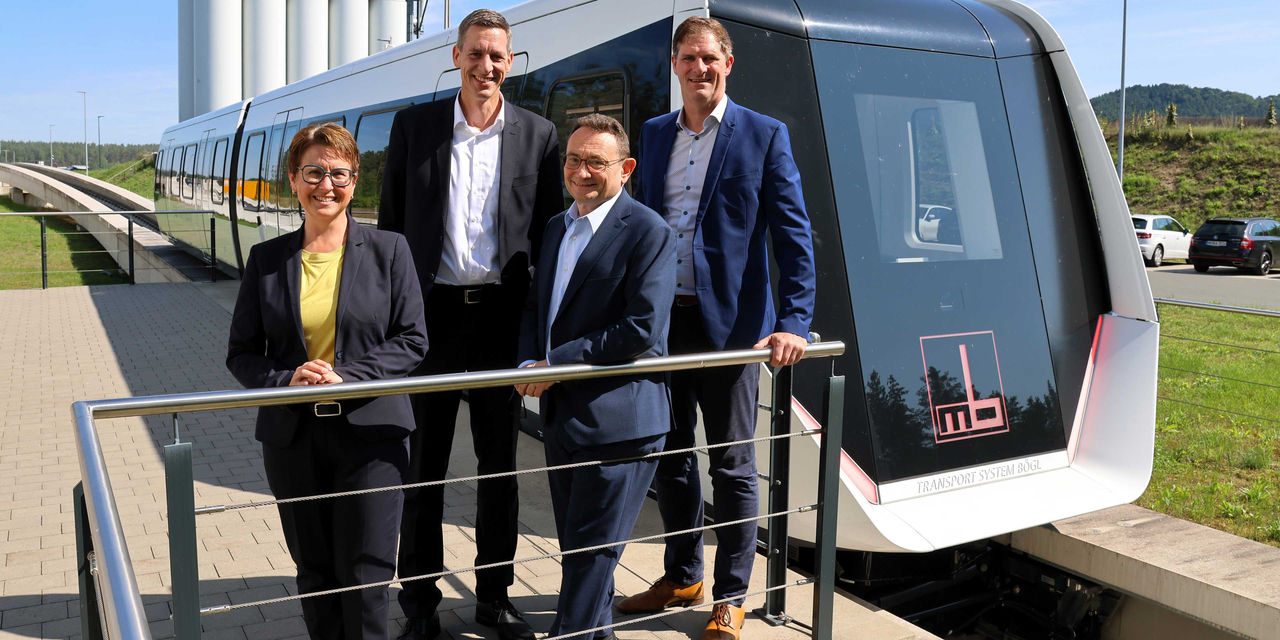
From left to right: Member of the Bundestag Susanne Hierl, CEO Stefan Bögl, Parliamentary State Secretary Ulrich Lange, and shareholder Johann Bögl. Photo credit: Max Bögl Group / Jürgen Kotzbauer