Social Share Icon


Standardized Project Management

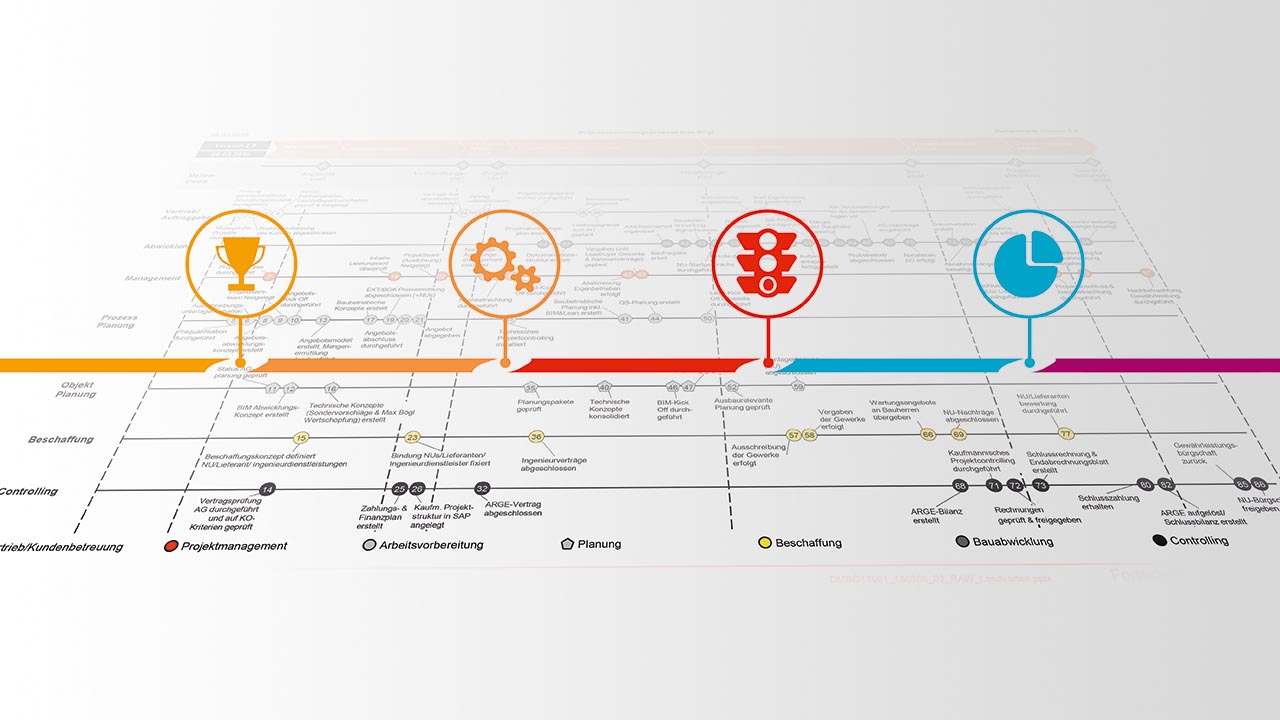
The maxlandkarte is the new tool for standardized project management at Max Bögl. By introducing this uniform project management standard—which every employee can consult—we aim to achieve several goals: improved internal and external collaboration, increased transparency in project execution, and a noticeable reduction in the workload of our employees. And ultimately, to ensure the long-term viability of our corporate group. The maxlandkarte is the new tool for optimized project management.


Standardisierte Projektabwicklung


The maxlandkarte maps out the entire project management process, from the acquisition phase through the end of the warranty period. The focus is on pre-work activities designed to identify and prevent errors in the later Execution of work phase at an early stage, thereby saving costs and ensuring quality and on-time delivery. By approving milestones as we move from one phase to the next, we minimize risk in project execution and prevent the misallocation of resources.


Typical outcomes of standardized project management include increased efficiency in the execution and oversight of complex projects, as well as a reduction in rework, corrections, and rescheduling, which in turn accelerates project completion. In addition, a clear allocation of tasks, competencies, and responsibilities ensures improved control and transparency despite the large number of project participants. While the interdisciplinary composition of the project team ensures sufficient and diverse expert knowledge, the holistic planning and management of the project are guaranteed by the consistent involvement of the project management process role.


Standardisierte Projektabwicklung


A three-tiered committee structure—consisting of the project team, the steering committee, and the governing board—enables improved support for projects and facilitates faster decision-making. By delegating decision-making authority to lower levels, the focus is placed on a few key decisions, thereby reducing the burden on management.