Sustainability
Emissions
Reducing our emissions is one of our company-wide sustainability goals. We place a particular focus on reducing our product-related CO2 emissions throughout the entire life cycle. Our commitment is to understand our impact on the climate and the environment and to continuously reduce it.
In addition to carbon dioxide (CO2), the most significant human-caused greenhouse gas, there are other greenhouse gases such as methane and nitrous oxide. Therefore, when we refer to CO2, we always mean all greenhouse gas emissions, which are collectively referred to as “CO2 equivalents.”
Company-wide, we are already implementing a wide range of measures to reduce our emissions. The primary focus is on reducing greenhouse gas potential. Examples include substituting CO2-intensive cement clinker, expanding the use of Renewables, and minimizing resource and material consumption—for instance, through the use of leaner components or less reinforcing steel.
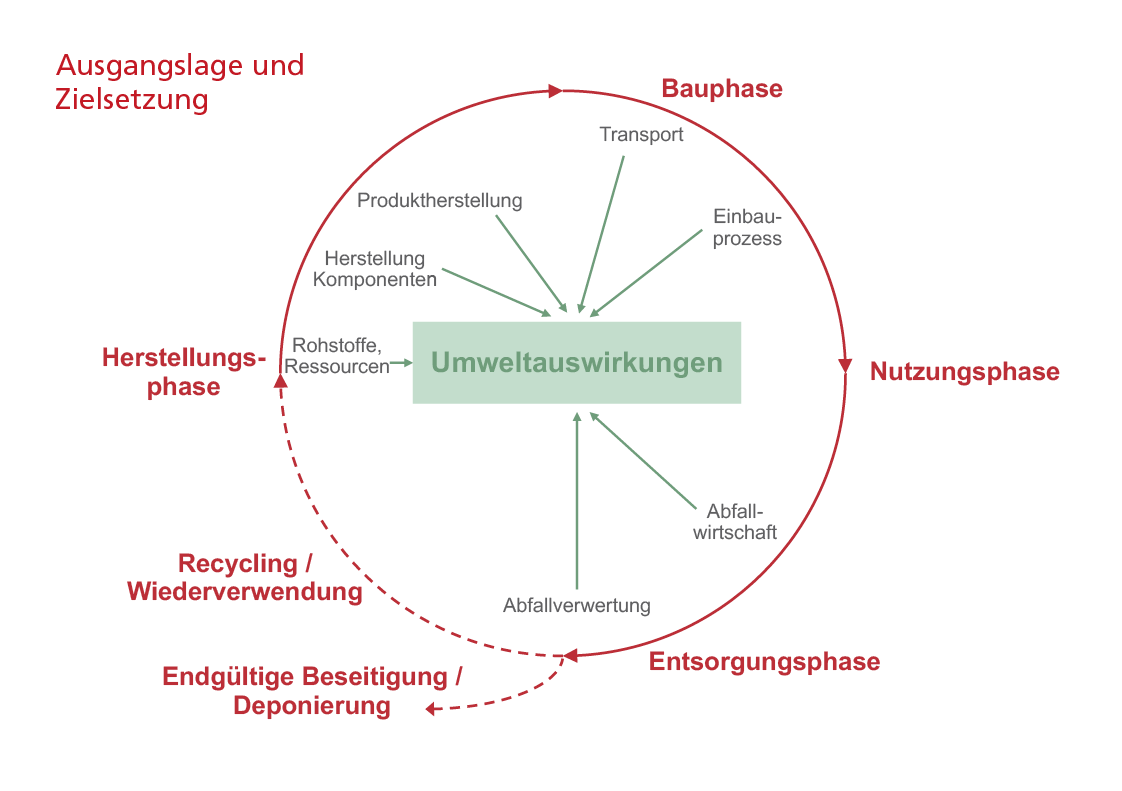
The primary focus of our climate protection efforts is on tracking and analyzing our product-specific emissions using well-established methods such as life cycle assessment (LCA) or an Environmental Product Declaration (EPD). To this end, we examine the entire life cycle of our standard products and identify where CO2 emissions can be reduced.