Social Share Icon

Own raw and building materials

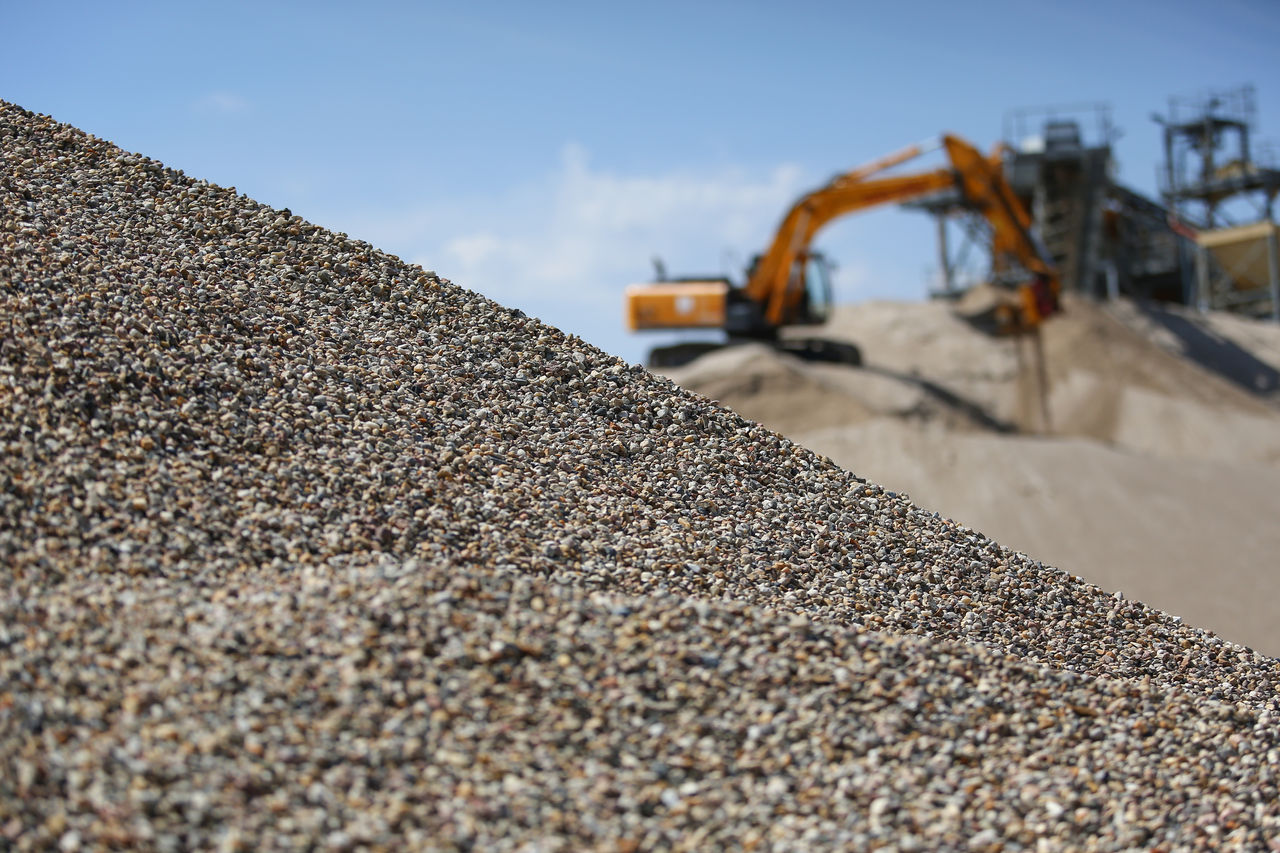
Materials are the foundation of our industrialized world. For decades, the Max Bögl Group has been involved in the extraction and production of high-quality raw materials and building materials. The range of services includes the raw products of sand and stone extraction through to their refinement in the form of high-quality concretes (such as our environmental concrete, see from page 114), asphalts and integral prefabricated elements. Thanks to our in-house production and extraction, we can influence the quality ourselves and optimally adapt the material properties to the high requirements of our building materials. When extracting materials for infrastructure projects, concrete and asphalt products, we use modern plant technology to achieve a high recycling rate and minimize the amount of overburden. In this way, we at Max Bögl achieve maximum utilization of the deposit body despite the high quality requirements for the materials. The areas required for the extraction of raw materials are only used temporarily and can then be reused. This recultivation creates species-rich habitats and valuable biotopes that are often no longer present in our cultural landscape.

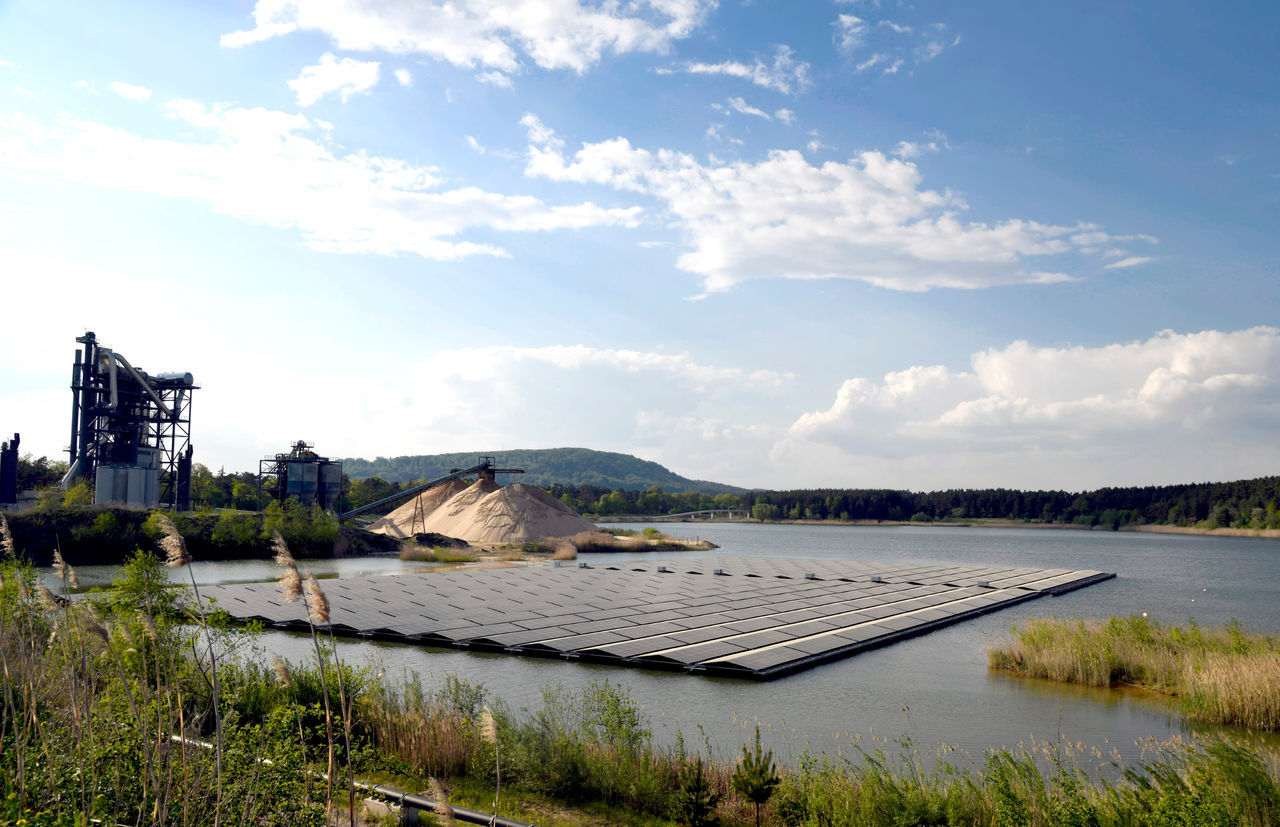
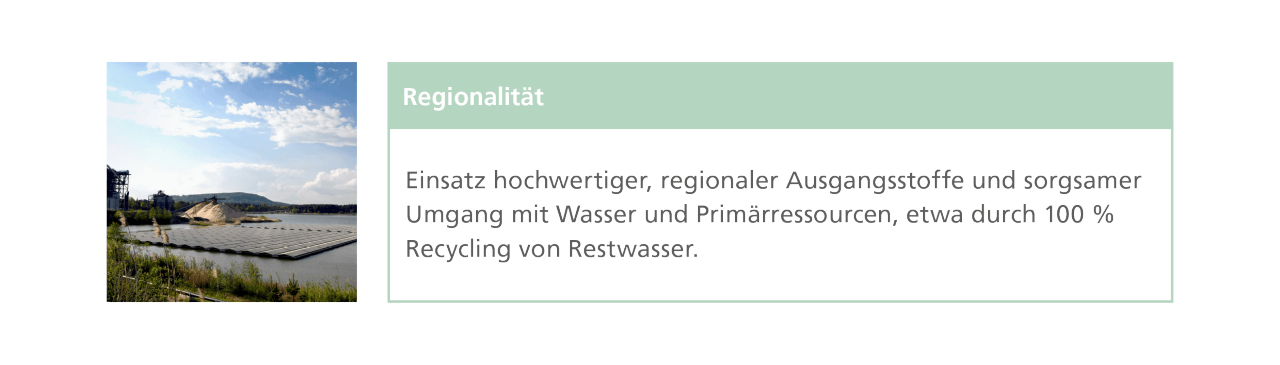
Schwimmende PV Anlage

ith a floating photovoltaic system on the quarry pond at our Schlierferhaide sand pit, we have created a particularly sustainable way of reusing an extraction site. At the same time, it serves as a renewable energy source for the sand extraction equipment used there.

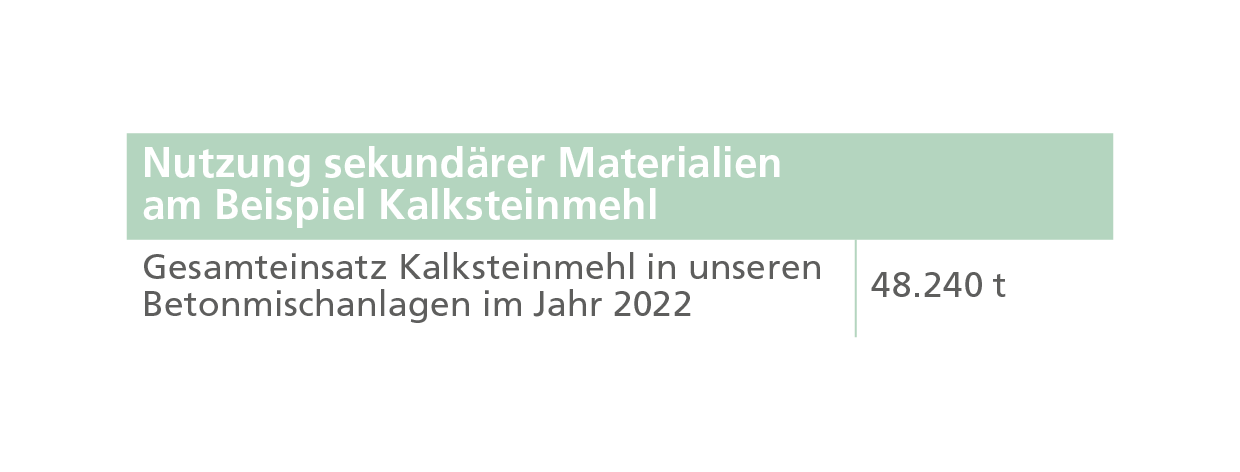
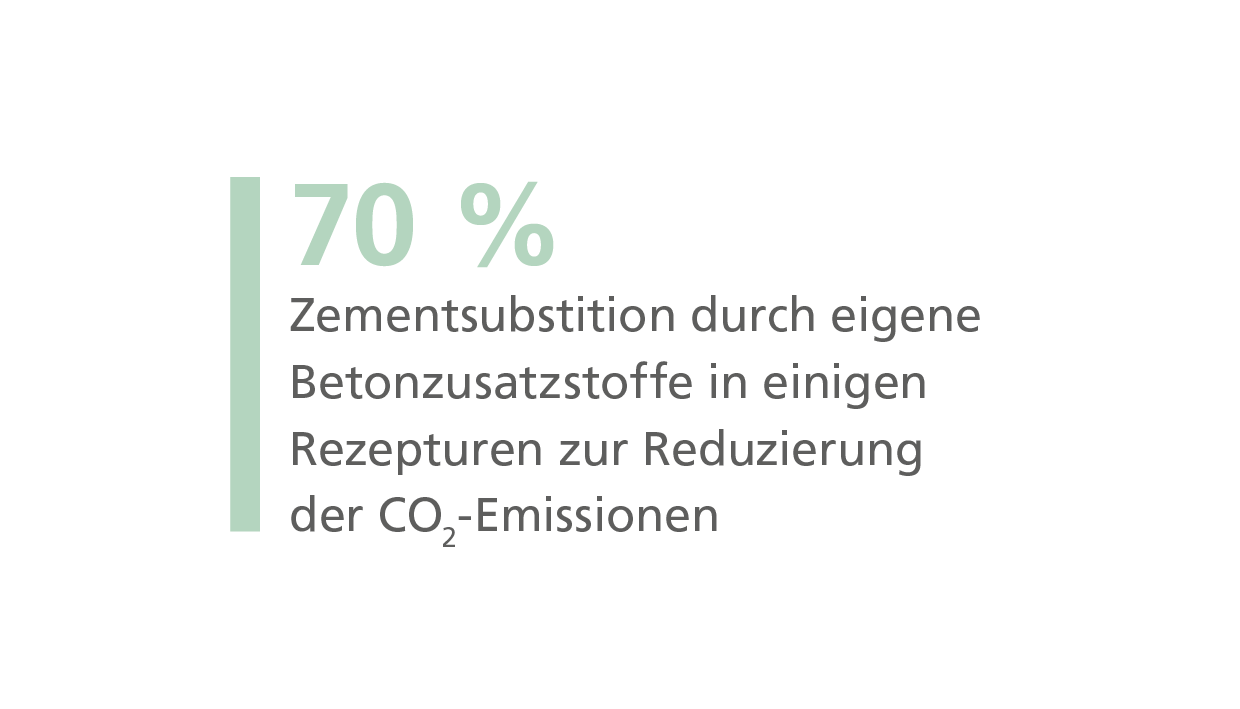
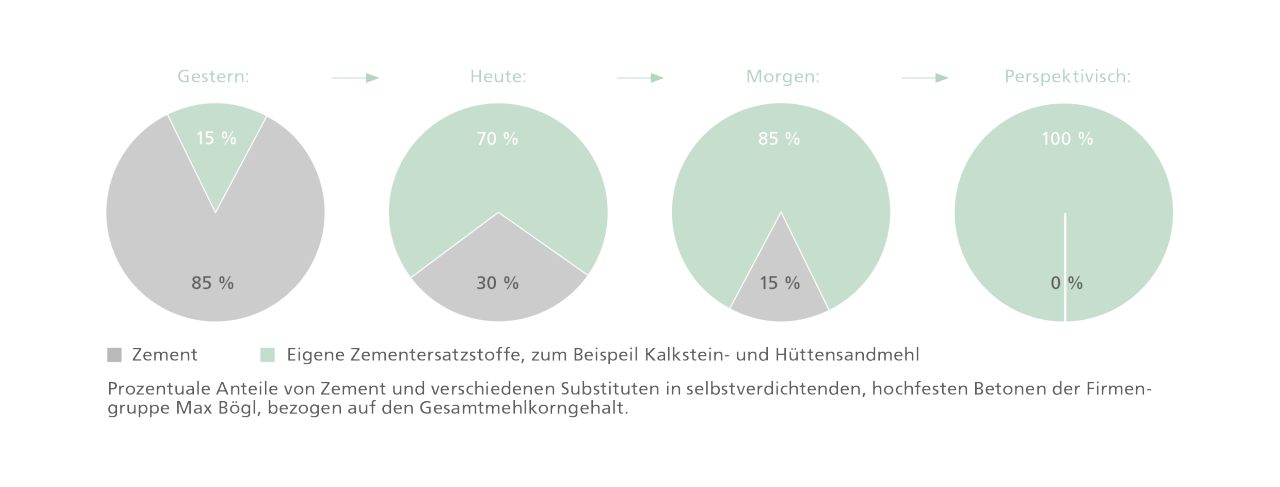
The extensive use of our own concrete additives, such as limestone powder or other reactive cement substitutes, not only makes a significant contribution to the circular economy, but also allows us to substitute the cement content, which accounts for the majority of CO2 emissions in concrete. In some formulations, we are already achieving cement substitution of around 70%. Over the next few years, we want to extend cement substitution to other formulations and increase the degree of substitution. If the use of our own concrete additives is severely restricted or not possible due to current standards, applicable guidelines, availability or production conditions, we rely on cements with a reduced clinker content in order to keep the greenhouse gas emissions of our concretes as low as possible.

Grafik
Grafik

Ready-mixed concrete: Sustainable regional materials

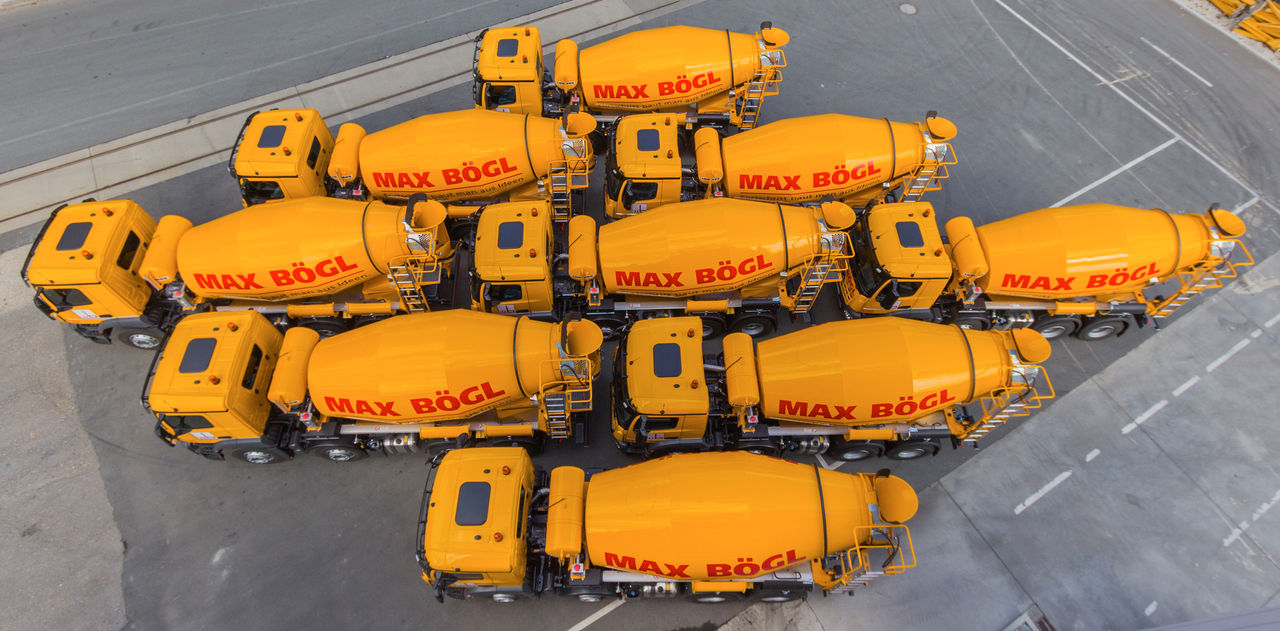
Ready-mix concrete is a high-quality building material whose production requires many years of experience, tried-and-tested formulas and high-quality raw materials. We supply our high-quality and sustainable ready-mixed concrete for various applications such as Building Construction, Civil and Industrial Construction, Agricultural Construction or Gardening and Landscaping.

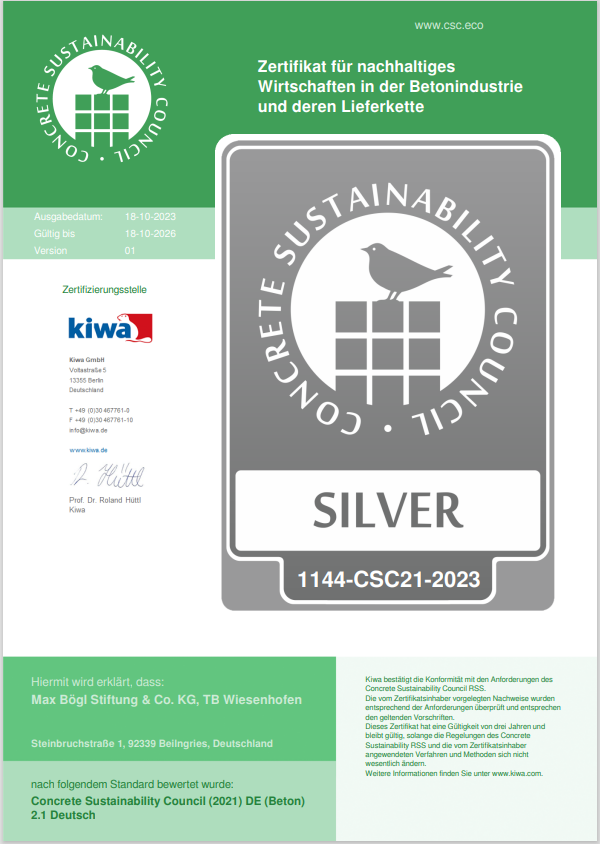
Our concrete mixing plants have been CSC-certified since the beginning of 2023. This is an independent certification that promotes transparency regarding the concrete production process and its value chain. The award also certifies that our plants demonstrate ecological, social and economic responsibility along our value chain. The CSC certificate is recognized by the common certification bodies for buildings - such as DGNB, ÖGNI, BREEAM and LEED - which means that the use of environmentally friendly concrete can be verified.

Transportbeton

An excerpt of our measures for sustainable ready-mix concrete production:

■ climate-friendly materials: we are continuously improving the carbon footprint of our ready-mix concrete by using cements with low clinker content, cement substitutes and recycled materials.

■ Regional partnerships: Short distances and reliable deliveries through cooperation with local partners and quality-monitored raw material supply

■ Sustainable raw material management: Concrete, which used to be considered Waste, is now a means of conserving resources. We use certified recycled aggregate in various ready-mix concrete applications, up to 45% by volume in the finished product.

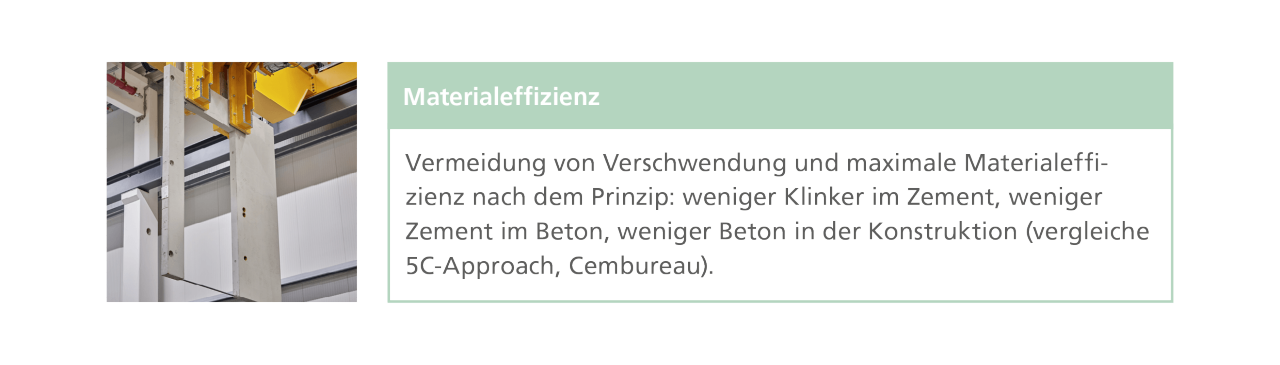
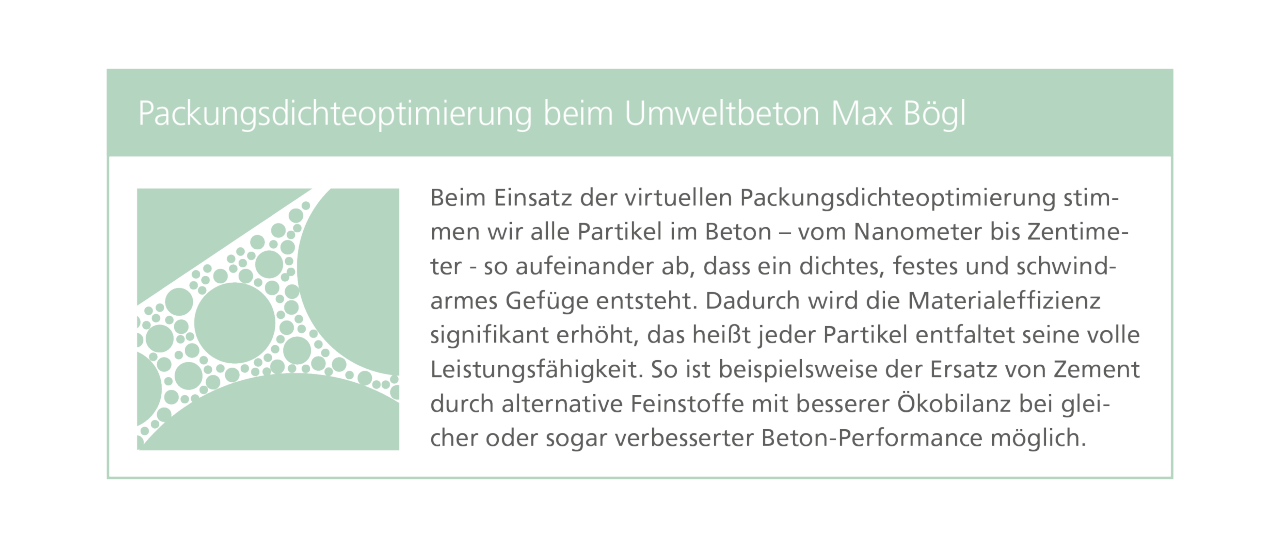
■ Technological leadership: Through the efficient use of raw materials, (high-performance) admixtures and packing density optimization, we are able to produce concretes with increased durability and reduced emissions.

■ Concrete 4.0 for consistently high quality: Digital and sensor-based quality testing of ready-mixed concrete with (partially) automated feedback into production ensures seamless Quality control and helps to reduce unnecessary safety buffers.

The effective contribution of these measures to sustainable concrete production was recently confirmed by the IFB Rosenheim in the form of four EPDs for different ready-mix concrete mix designs. The mix design with the lowest GWP (Global Warming Potential)* of 121 kg CO2 eq/m³ has around 53% fewer emissions than the current industry average.

epd zeichen
kiwa auszeichnung

*The GWP value is a key figure used in life cycle assessments and environmental assessments to quantify the impact of greenhouse gases on climate change.


Environmental concrete Max Bögl: Getting the best out of Materials

eton has played a central role since our company was founded over 90 years ago and is firmly anchored in our DNA. As a T-echnology and innovation leader for sustainable high-performance concretes, we are shaping the future of this fascinating building material and thus the future of Max Bögl. For us, sustainability means one thing above all: future viability.

We believe that the environment is everything that surrounds people: In addition to the natural habitat, this primarily includes the buildings in which we live and work, our production facilities and construction sites, the Infrastructure we use and even the virtual environment in which we spend time every day. For us, sustainability goes far beyond climate protection and CO2 reduction. We want to make building with concrete as safe and gentle as possible for everyone involved in the construction process in the respective environment, avoid waste and produce tailor-made and technologically excellent concretes for our customers.

Hochtechnologie

Our measures are geared towards the following key areas of action:

Grafik

We apply these principles to all our concretes. However, with some formulations we set completely new standards that go beyond industry standards and develop concrete into a climate-neutral and modern high-tech building material. These are our so-called environmental concretes.

Extensive requirements for Max Bögl environmental concrete

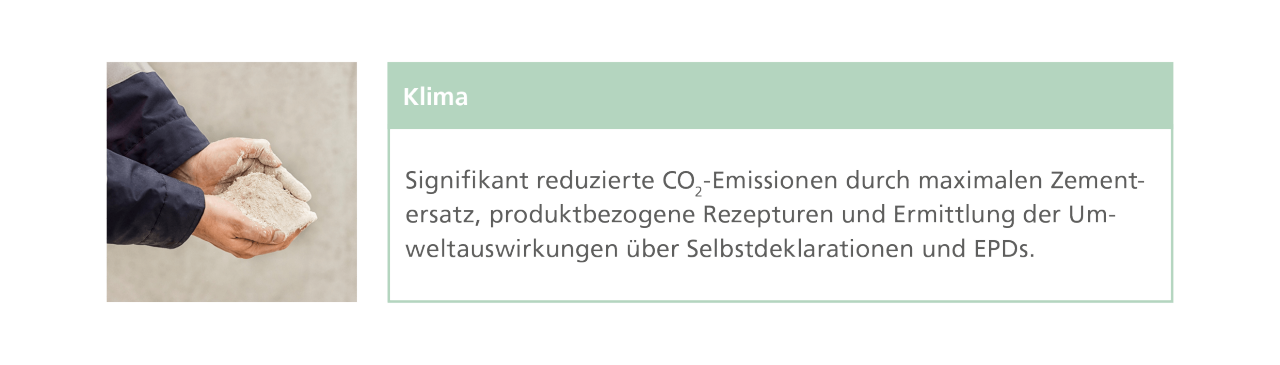
Environmental concrete is more. More than CO2 reduction, more than certificates and more than minimum standards for sustainable building materials. Environmental concrete is our way of working with concrete in a sustainable, modern and future-oriented way. With our environmental concretes, the use of numerous measures from the following fields of action is examined in a standardized process and an overall picture is determined:

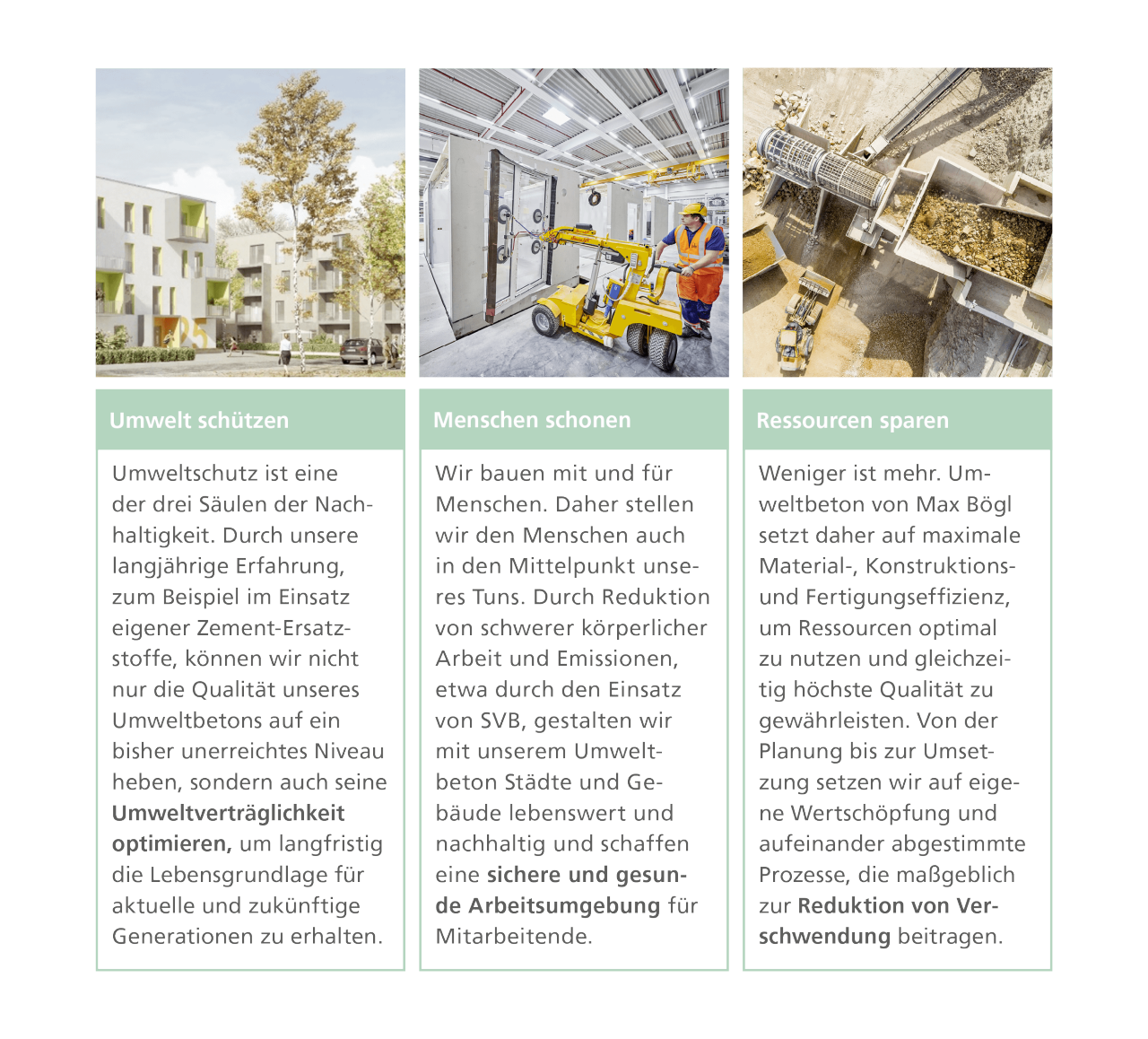
Forschung
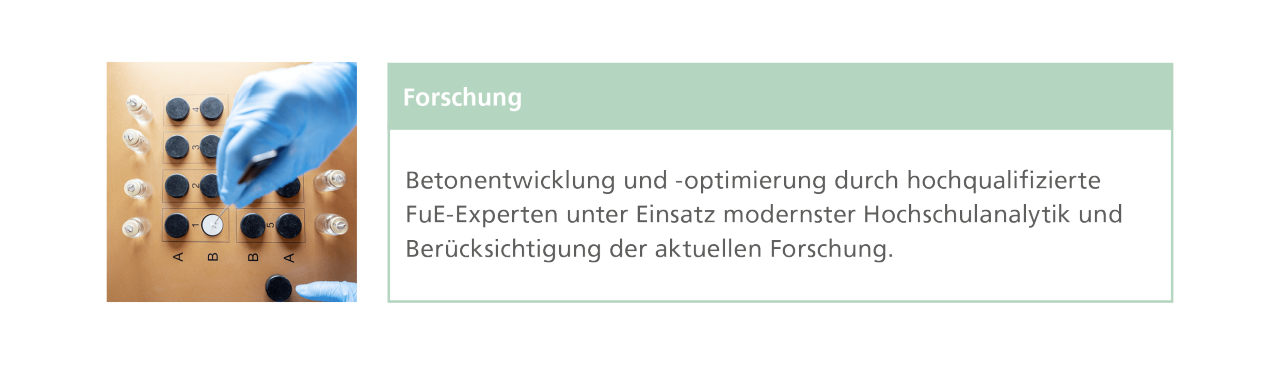
Ergonomie
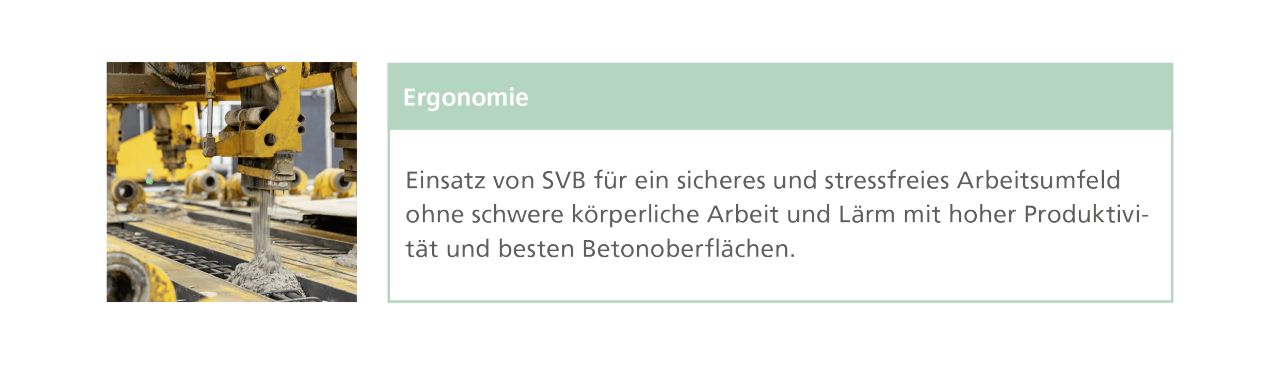
Klima
Regionalität
Simulation
Materialeffizenz
Packungsdichteoptimierung

Individual, project-specific consideration

Just like every construction project, the associated environmental impact is individual. Depending on the location, ready-mixed concretes and precast reinforced concrete parts from different plants are used. As we attach great importance to regional raw materials and production-appropriate formulations, our concretes differ from plant to plant and even within a plant in order to use the optimum concrete for each component and product.

The GWP values of raw materials or calculation rules also change regularly. This results in very dynamic changes to the industry average values. This means that what is correct today may be outdated tomorrow. Instead of flat-rate values for GWP values or savings, our experts therefore determine exact values or savings on a daily basis and create project-specific self-declarations for our concretes.

"We take a holistic and project-based approach to sustainable concrete. We use our expertise and T-echnology to develop high-performance concretes from our own raw materials and reduce CO2 emissions and, above all, material waste. Our goal is to turn all concretes at Max Bögl into environmental concretes. "

- Stefan Bögl, Chairman of the Board

grafik umweltbeton

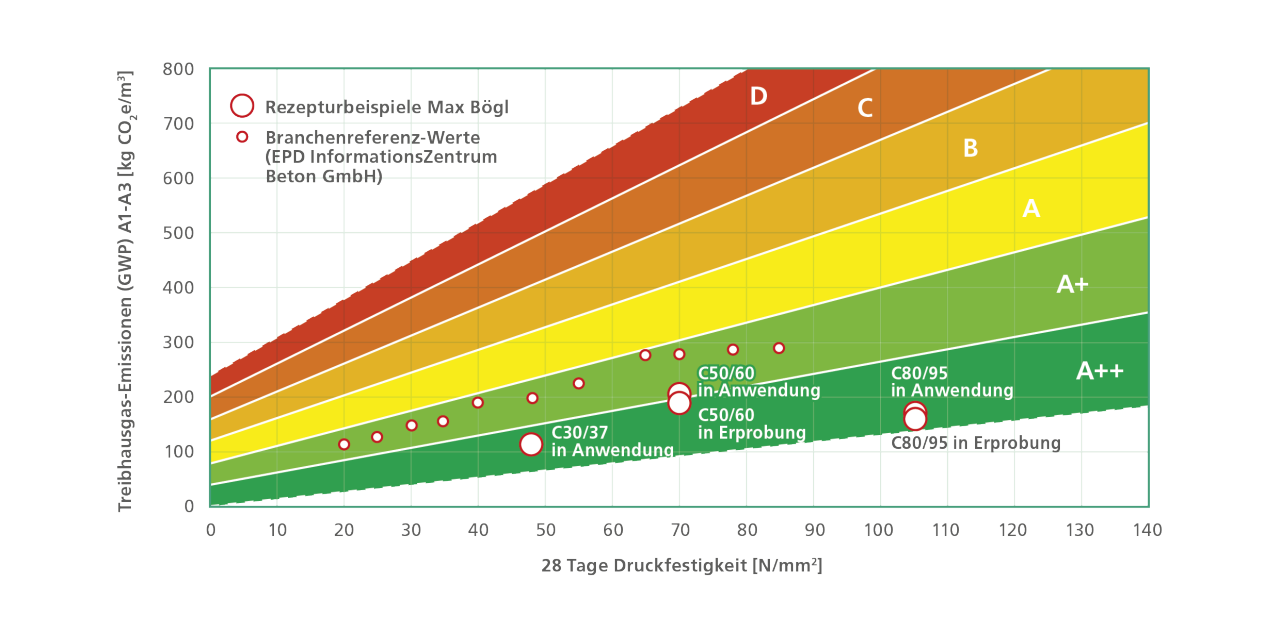
The figure shows the range of globally determined GWP values for concretes of different strength classes. Here, too, it is clear that there is a wide range of GWP values for each strength class. We have divided these into different classes from A++ to D in order to be able to classify our environmental concretes in an international comparison. As an additional benchmark, we have integrated the current German industry average values for common strength classes, some of which we fall well below with our environmental concretes.

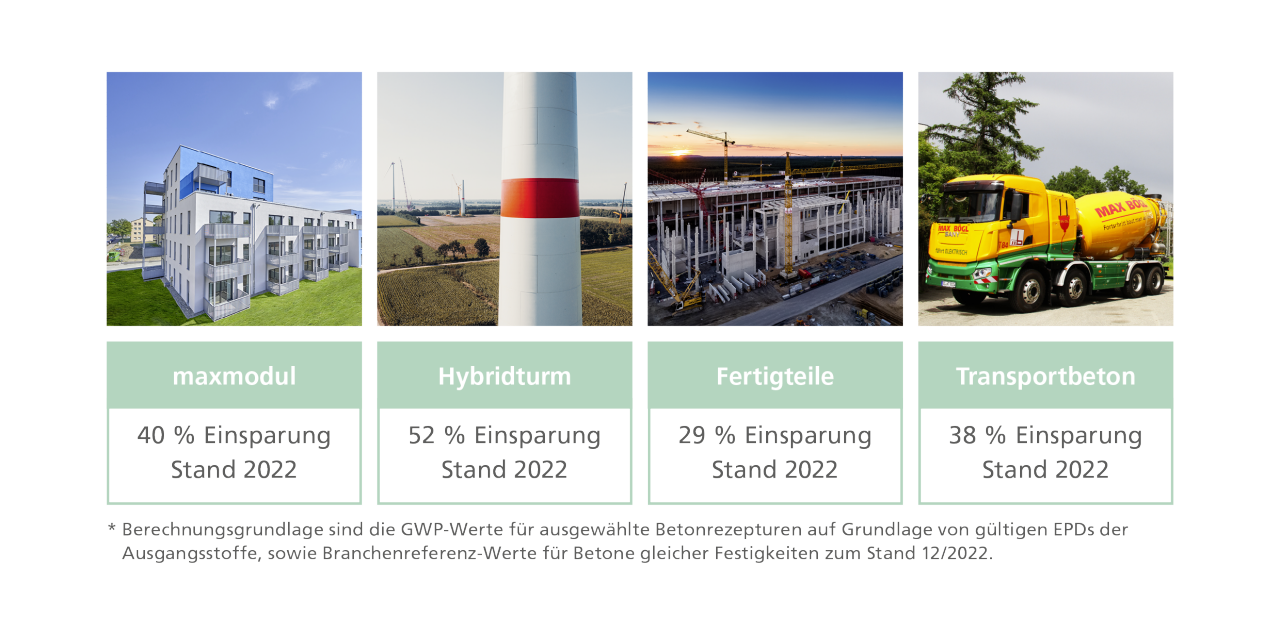
It goes without saying that we create transparency about the CO2 emissions of our concretes. This is an important prerequisite for building certifications and proof that we deliver what we promise. In the following areas, among others, we have already successfully achieved CO2 savings* with our environmental concretes compared to reference concretes of the same strength:

Einsparungen

Together we cross borders

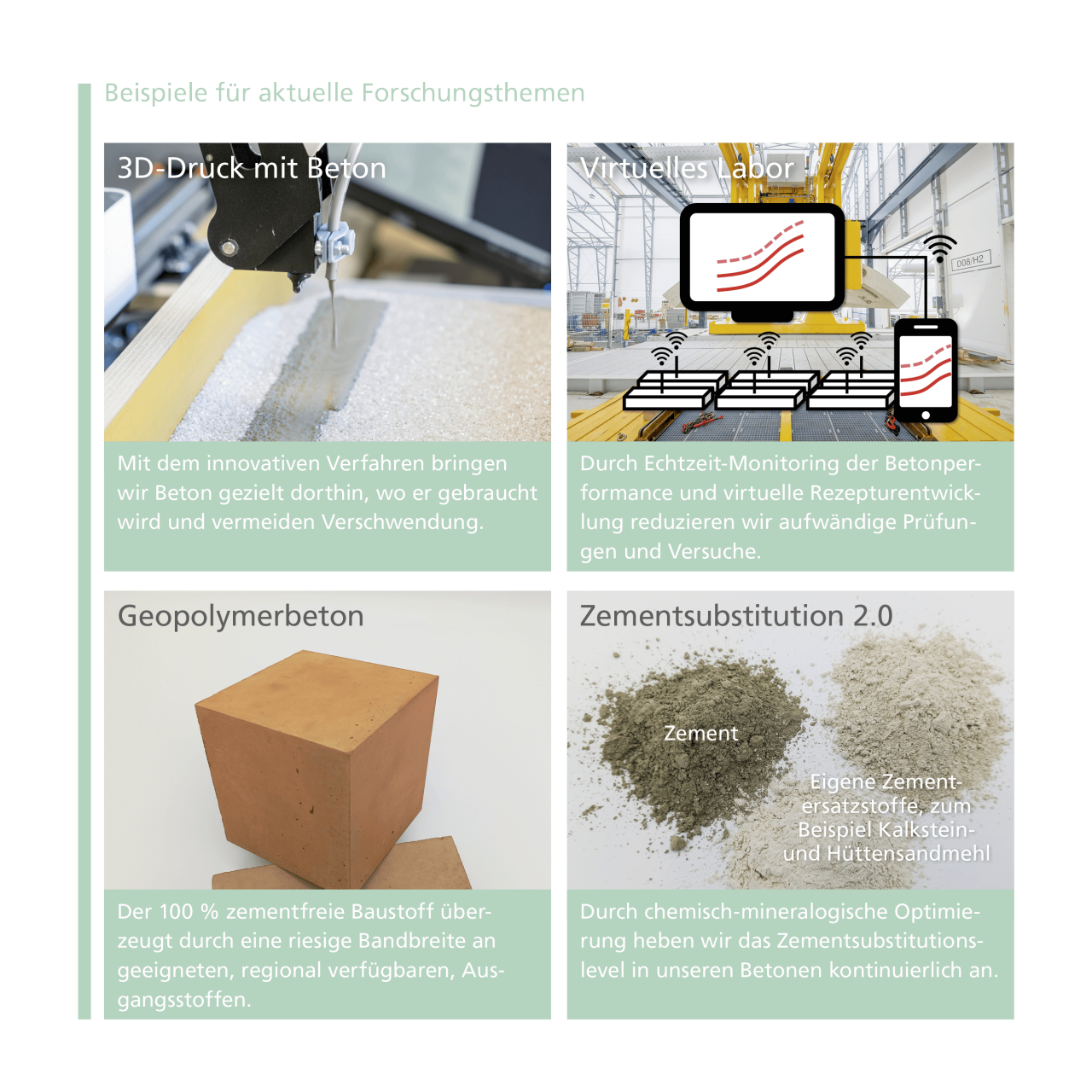
n addition to technologies that have already been implemented in operations, such as the use of self-compacting concretes or cement replacement using our own materials, our Research and Development department is working on future technologies such as cement-free concretes, new types of raw materials, processing methods and construction principles. But to stay at the forefront, we need innovative, technology-open and future-oriented partners. This is because the rapid implementation of customer-oriented, sustainable innovations beyond normative boundaries requires intensive communication between all parties involved as well as special approvals.

Forschungsthemen

Cement substitution

Most of the greenhouse gas emissions in concrete come from the cement, which acts as a binding agent to bind the aggregates together. In turn, the production of cement generates greenhouse gases primarily during the burning process of the so-called Portland cement clinker, the main component of cement. These originate on the one hand from the fuels and on the other hand from chemically bound CO2 in the raw materials.

We therefore try to keep the cement content in our concretes as low as possible and use our own cement substitutes. Various rock flours or high-quality secondary raw materials from other branches of industry, such as ground blast furnace slag from the steel industry, are suitable as cement substitutes. Refined natural raw materials, such as activated clay minerals, are also in no way inferior to traditional cement. The chemical composition of the latter is similar to volcanic ash, which the Romans already used for their buildings.

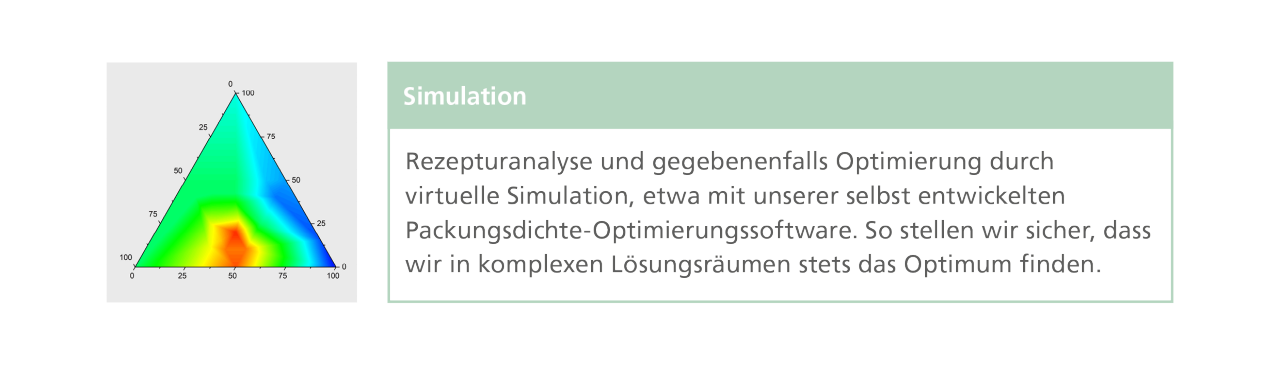
Thanks to our many years of experience in the production of limestone and granulated blast furnace slag, specially developed software for packing density optimization and a modern binder laboratory, we design tailor-made binder systems. This allows us to produce high-performance concretes with minimal cement content. In some areas of concrete construction, even 100 % substitution is conceivable. We have already produced successful prototypes.

Zementsubstitution

Concrete in competition

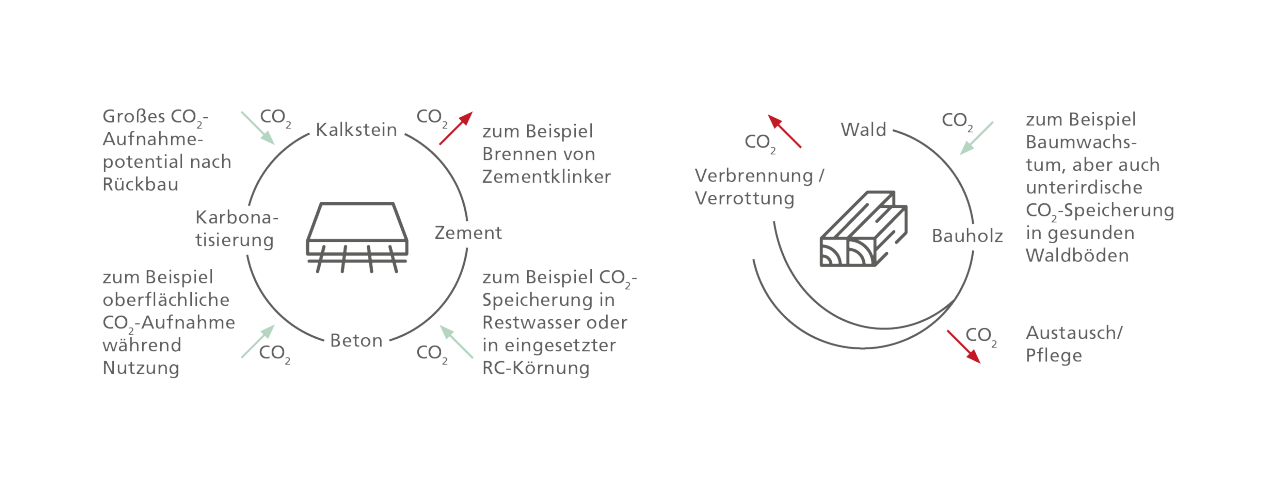
Concrete is currently often criticized among building materials as being harmful to the climate. There are several reasons for this negative image. Often only the main load-bearing structure of a building is considered, but not the additional structural measures required with regard to fire and noise protection, insect damage or weathering. However, a particularly distorted representation results in life cycle assessments in which only the production phase of a building (modules A1-A3) is considered. While concrete can reabsorb some of the CO2 emissions during the use phase and especially at the end of its life cycle and store them permanently as artificial limestone, wood, for example, releases the CO2 bound during growth. In addition, concrete is almost 100% recycled today, while construction timber is mainly thermally recycled.

In our view, timber construction is not the most effective strategy for achieving climate targets. Valuable CO2 sinks are lost through the clearing of trees. Newly planted trees only begin to absorb CO2 in a climate-effective way after a few decades. We therefore maintain our trees instead of cutting them down in order to preserve such CO2 sinks (see chapter 4.1 Emissions).

While we believe that the possibilities for sustainable development, performance optimization and CO2 reduction in some areas of building materials are limited or have almost been exhausted, we see enormous innovation potential in concrete for the coming years. Our goal is to further develop concrete into a climate-neutral and safe high-performance building material.

Beton im Wettbewerb

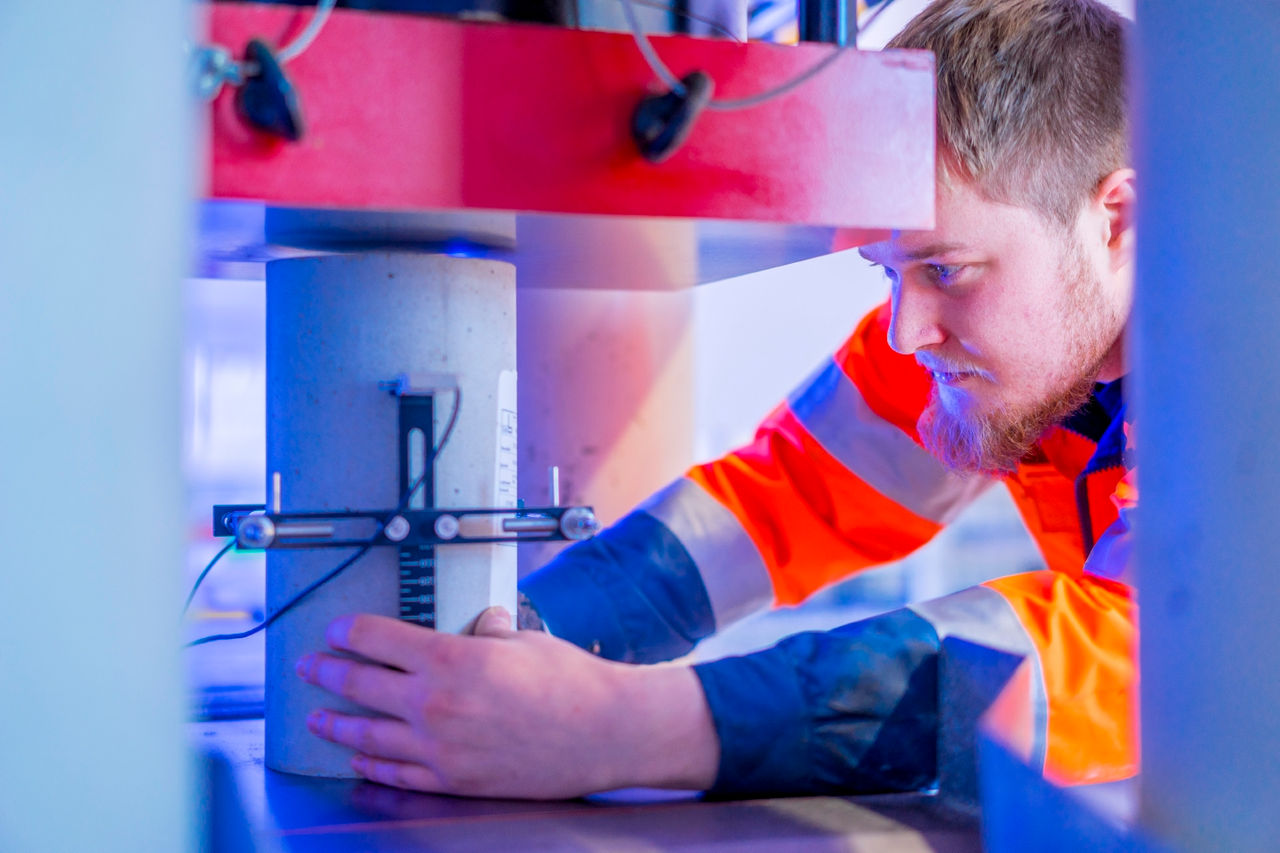
Quality control and central laboratory

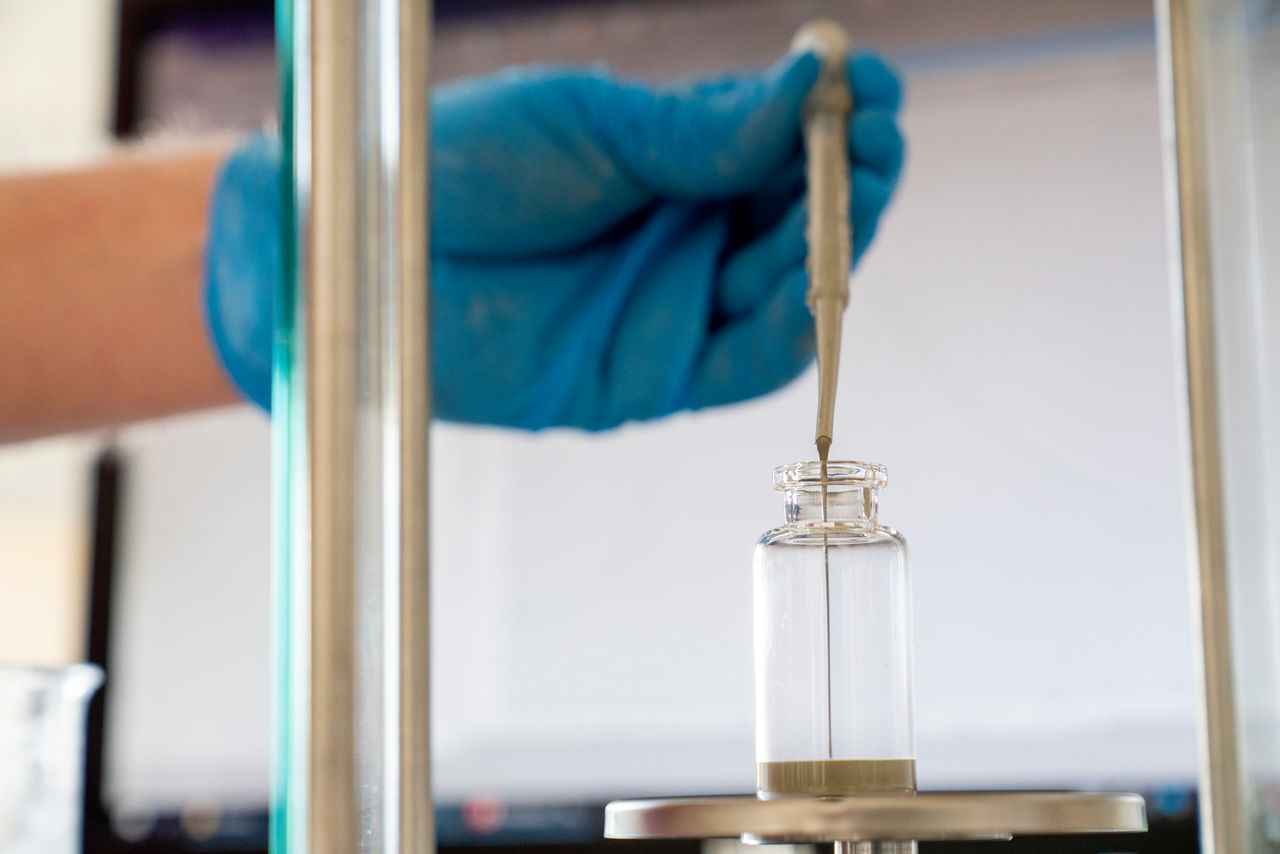
o ensure and continuously improve our outstanding building material quality, our central laboratory monitors the quality of our concrete and asphalt products as well as our earthworks projects. Our colleagues supervise and advise our construction sites, concrete and asphalt mixing plants, precast plants and extraction sites throughout Germany. The in-house monitoring of self-produced concrete additives, such as limestone powder, is also part of the extensive range of services provided by the central laboratory as an internal service provider. Below are some examples of the range of tasks in the field of aggregates and concretes:

Aggregates

■ Testing of physical and chemical properties to characterize the aggregates used (e.g. particle size distribution, freeze-thaw stress)

■ Factory production control (FPC) for our extraction sites as an instrument of Quality control

■ Support for large-scale tests as a basis for decisions on investments in new processing technology

Concrete

■ Concrete technology support for projects

■ Design and optimization of concrete recipes

■ Application of special concretes with separate building authority approval for the use of innovative and sustainable products and construction methods

■ Fresh and hardened concrete tests according to Standard, as well as special tests to characterize durability (e.g. CDF, RCM, concrete cover measurement)

Betontechnologie

Industrial construction

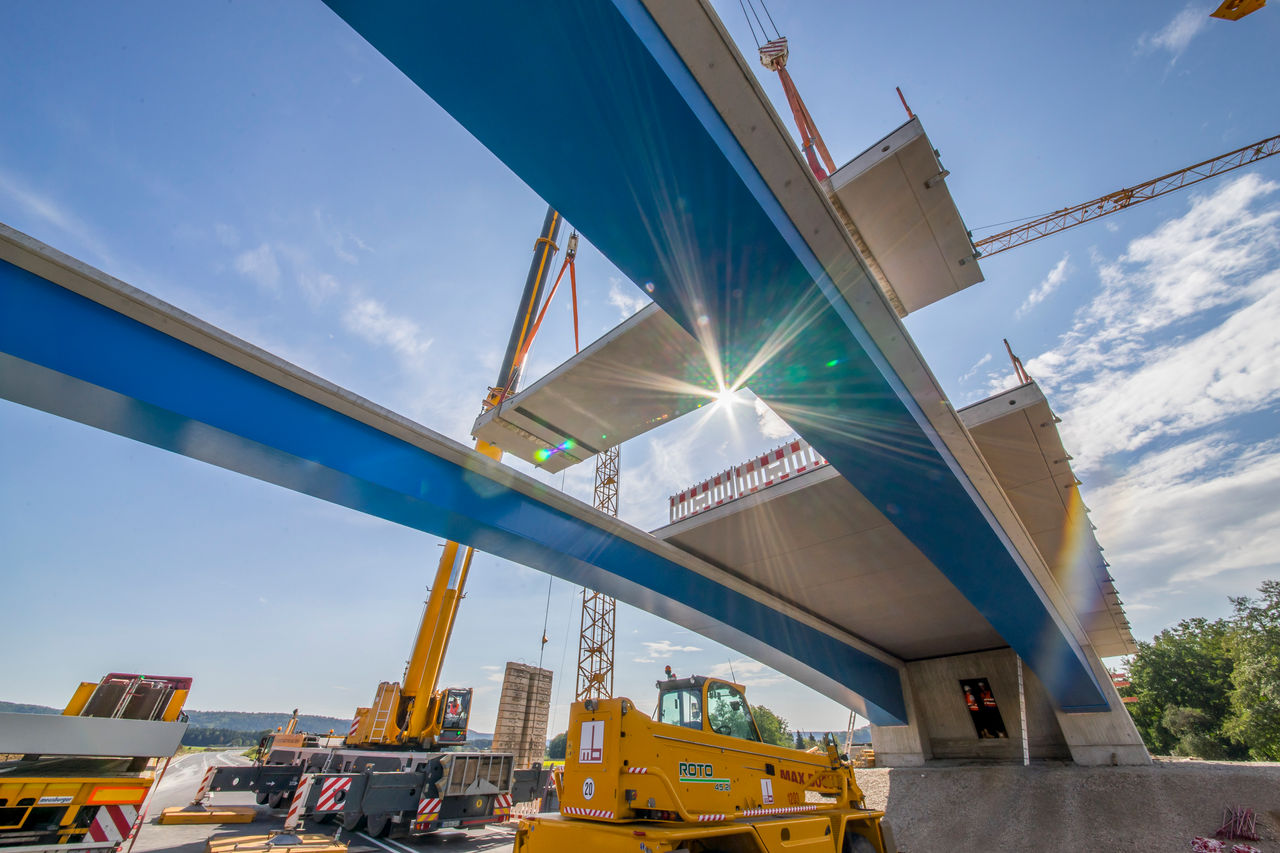
hrough the interaction of sustainable materials with innovative and standardized construction systems and industrial processes, we create sustainable products for our customers. In doing so, we move away from conventional construction methods and use industrial processes to optimize our efficiency and quality for on-time performance.

Until now, the construction industry has tended to be characterized by manual structures and processes. Due to increasing customer requirements with regard to shorter construction times, taking into account social and environmental influences, we believe that a consistent implementation of industrial approaches is required in order to ensure competitiveness in the future.

We also see industrial construction as an opportunity to make our company even more attractive to employees. It provides us with the framework for ergonomically designed and safe workplaces and processes. We therefore also see a building as a product, such as our systematized logistics or production halls, residential buildings, bridges or hybrid towers. For us, a product is a complete solution that is created according to our standardized workflow process.

Serielles Bauen

The way in which we build and produce our products is particularly important here. We rely on modular and standardized construction systems. This enables us to achieve high structural quality, short planning and production times and effective use of the resources and materials used. At the same time, we also offer a wide range of configuration options.

We focus specifically on the requirements and needs of our customers and the market and combine these with our strengths, expertise and T-echnology. In doing so, we not only focus on individual phases such as production or operation, but also on the entire life cycle. The decisive course is set in the early performance phases. It is therefore important to take the relevant aspects into account as early as the planning stage. Our broad range of services enables us to handle and positively influence the entire value chain - from the raw material to the finished product.

The focus is always on the core value creation process, true to the motto "The process is the boss". By standardizing components, we enable industrial processes and still achieve individual and customer-specific solutions. One of the prerequisites for industrial construction is trouble-free processes based on clearly defined standards.

To achieve this, we rely on standardized processes in our projects - from the acquisition phase to the end of the warranty phase. This enables us to ensure improved internal and external cooperation and increased transparency along the entire value chain. With our certified quality management system, we ensure our process stability and the fulfillment of customer requirements. Supported by the implementation of the lean philosophy in our group of companies, we are able to reduce waste along the entire value chain and continuously improve our processes. Methods and tools such as cycle planning and store floor management ("maxpoint") support us in this. In addition, as described in section 5.1 Health and safety, we not only attach great importance to safe workplaces, but also to the health of our employees.

For us, our Bau+X strategy also means that we are further developing "traditional" construction and focusing on industrial construction methods. That is why we have defined topics that characterize industrial construction for us. The better the interplay between these themes, the more efficient, smooth and sustainable the implementation will be for everyone involved.

Product thinking

For us, product thinking means viewing a building as a product that is configured from standard elements and fulfills individual customer requirements. This also gives us the opportunity to standardize our processes and make efficient use of materials and resources
Produktdenken
Vorgefertigt

Prefabricated

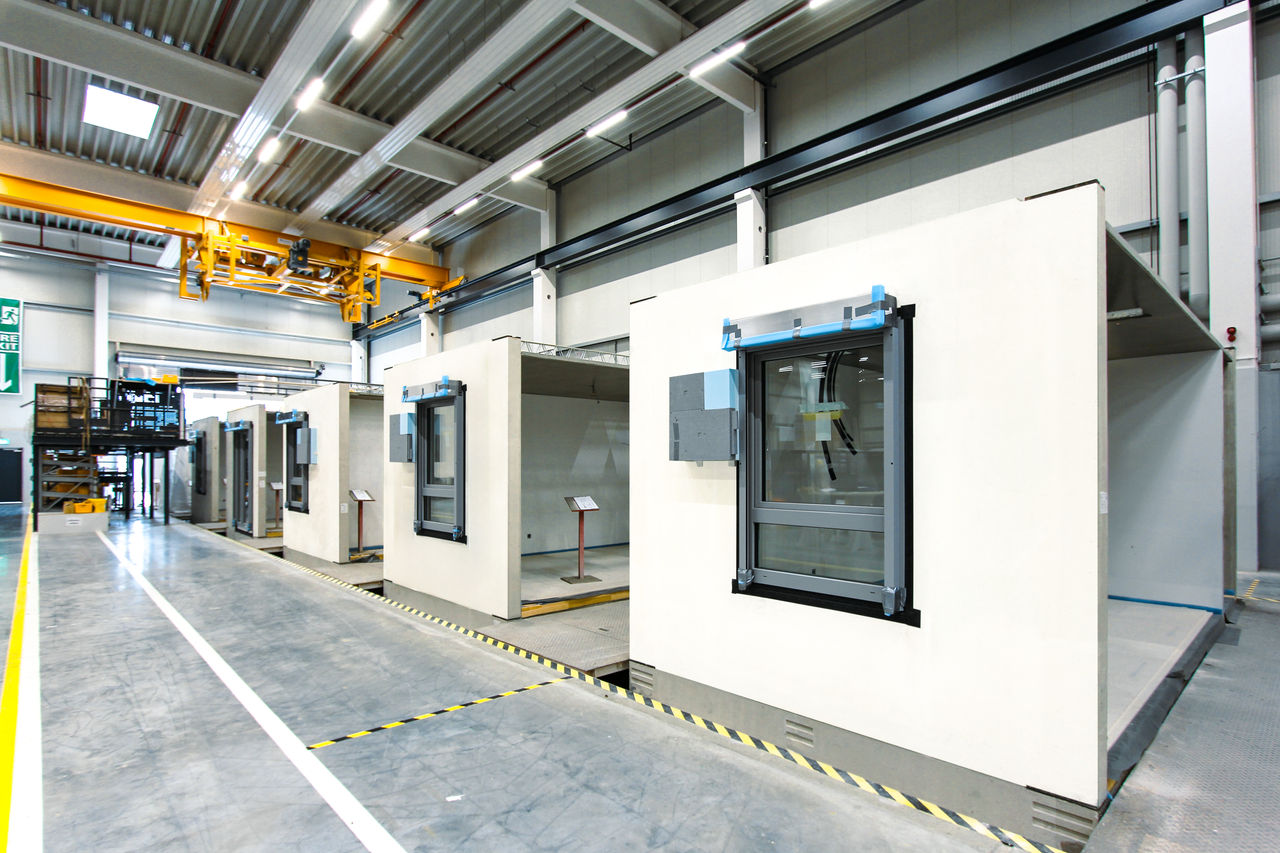
By prefabrication, we mean the production and preparation of individual components and entire assemblies so that they can then be joined together to form a product. Among other things, this enables us to transfer work content from the construction site to prefabrication and provide our employees with an ergonomic working environment.

Automated

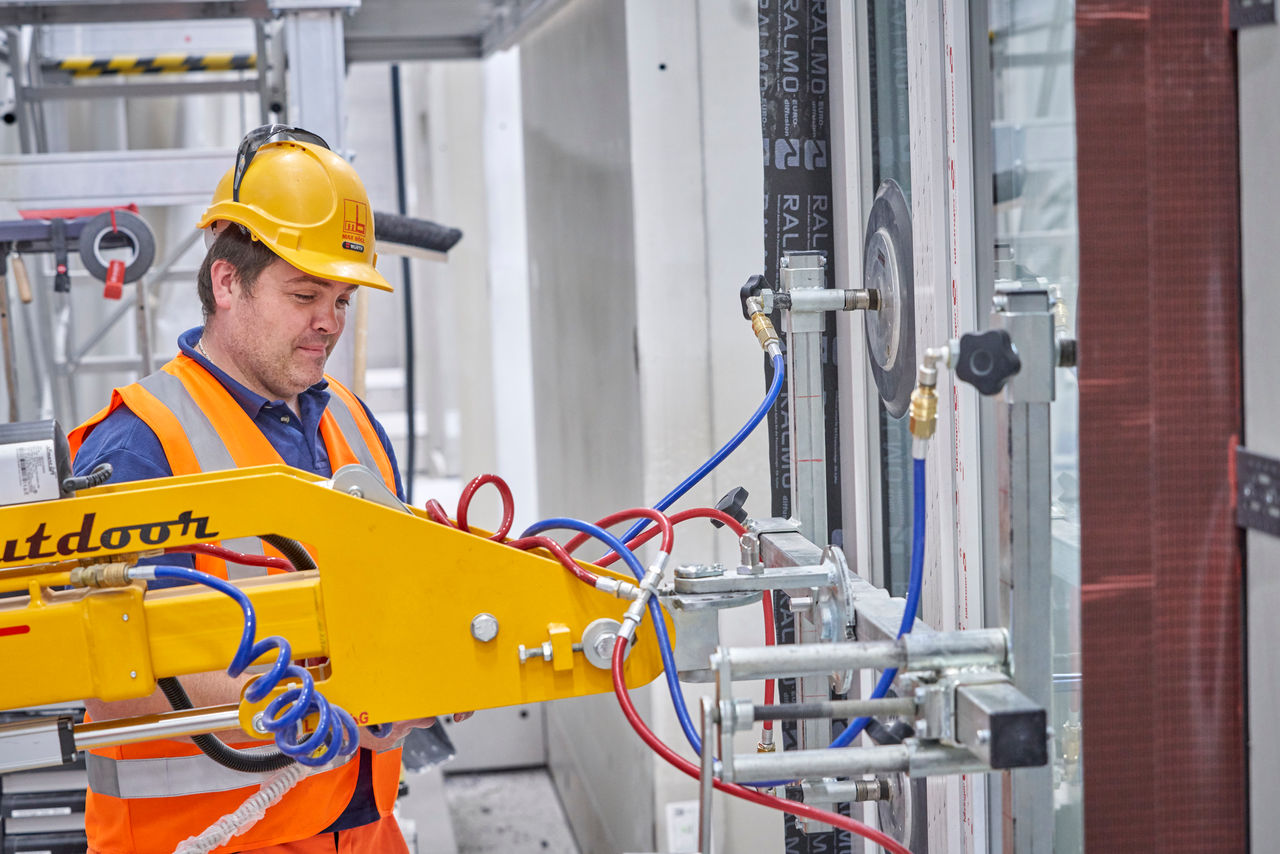
We work automatically and use machines, systems and robots to carry out work processes that would otherwise be performed manually. This gives us the opportunity to relieve our employees of strenuous work steps.

Automatisiert
Getaktet

Clocked

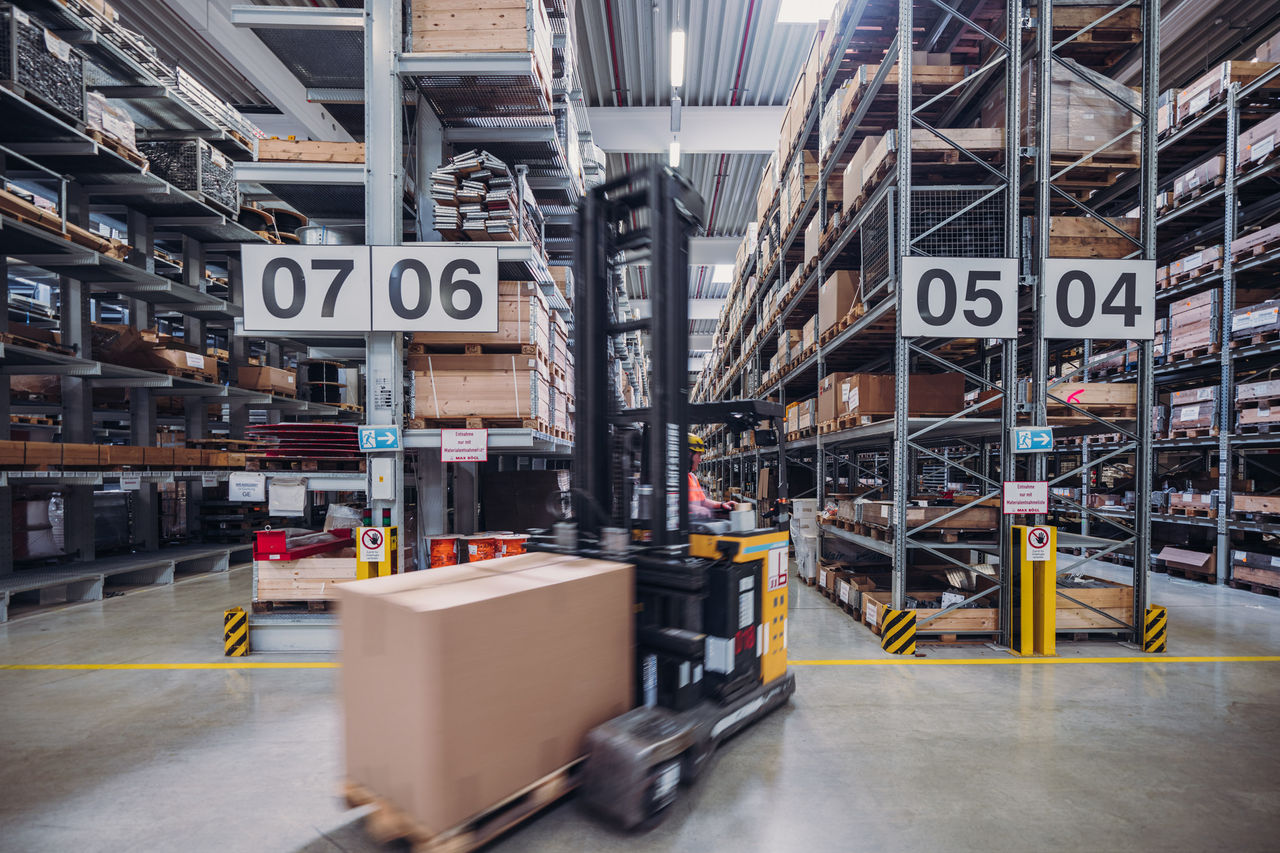
Our synchronized manufacturing process is evenly aligned with customer requirements and ranges from individual components to entire products. By coordinating the individual process steps, we achieve harmonization along the entire value chain, which in turn leads to lean construction processing and efficient use of resources.

Digital and networked

For us,digital and networked means the electronic exchange of information between several machines or systems. We use this information in the planning of our products, among other things, to make the ecological footprint transparent at an early stage and to be able to take countermeasures in the event of deviations.

Digital und Vernetzt

Digital planning

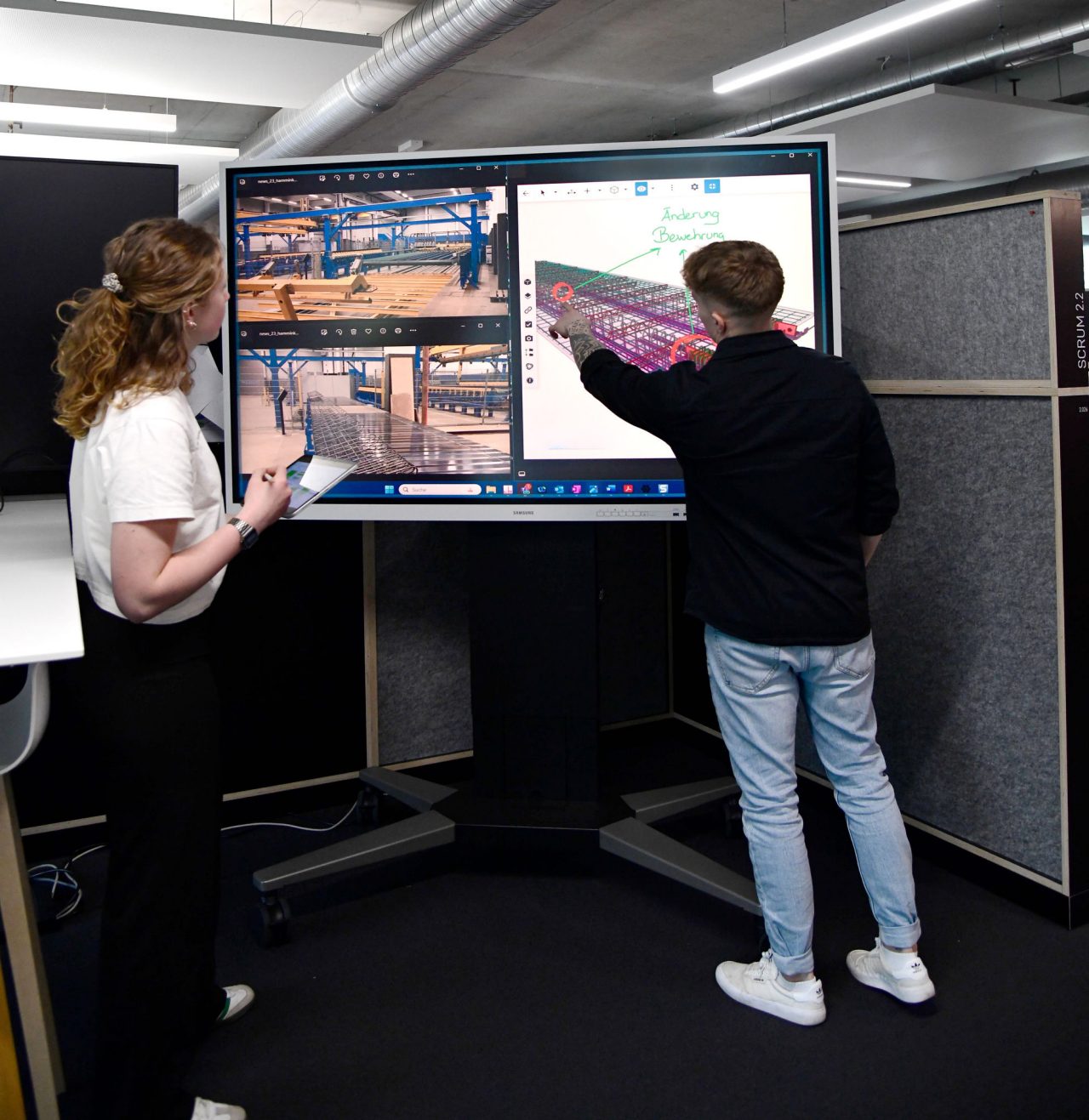
The construction industry is changing as the size and complexity of buildings continue to increase. Therefore, seamless information sharing across the entire lifecycle and the creation of a digital, collaborative working environment is crucial for a sustainable process.

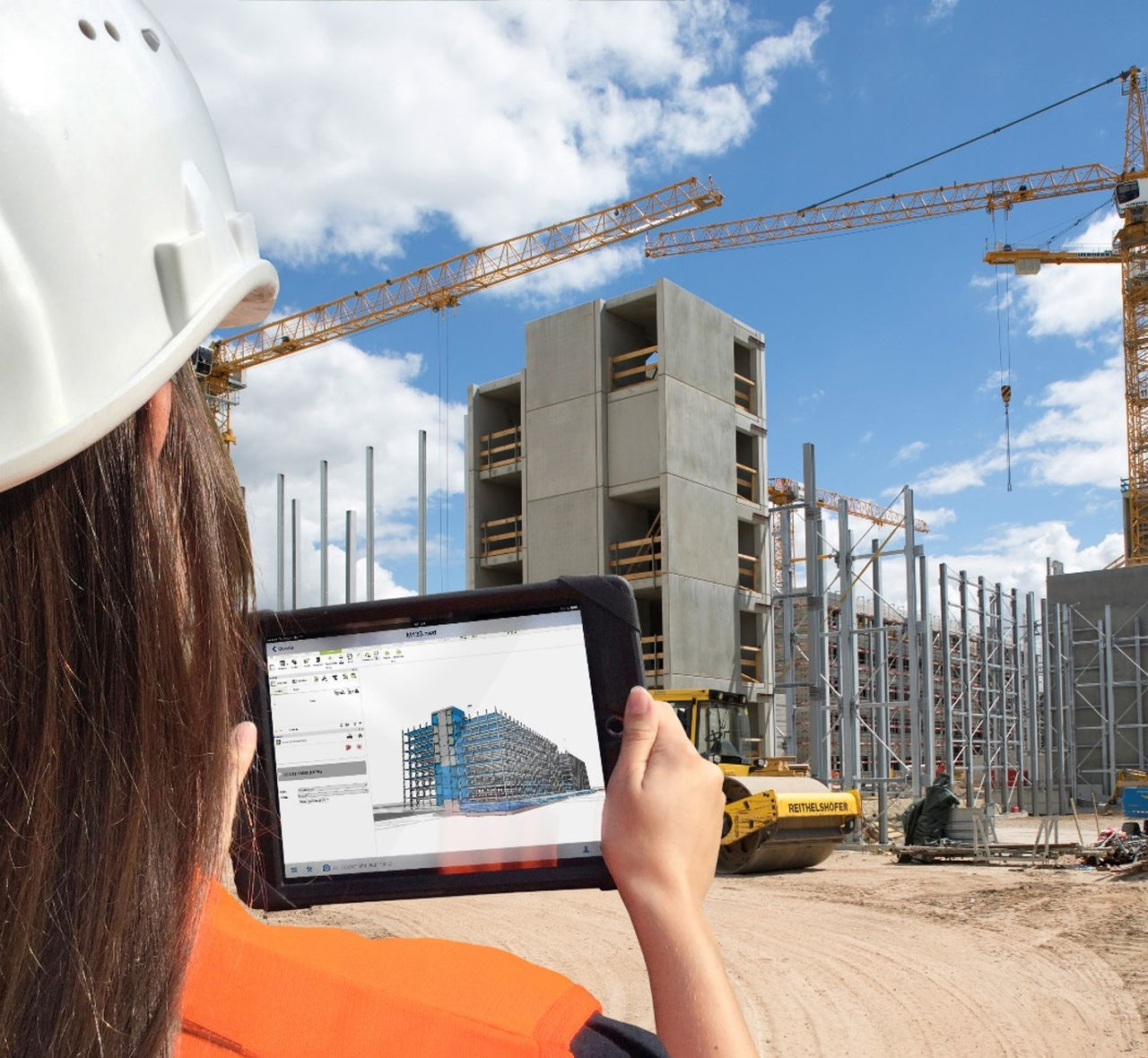
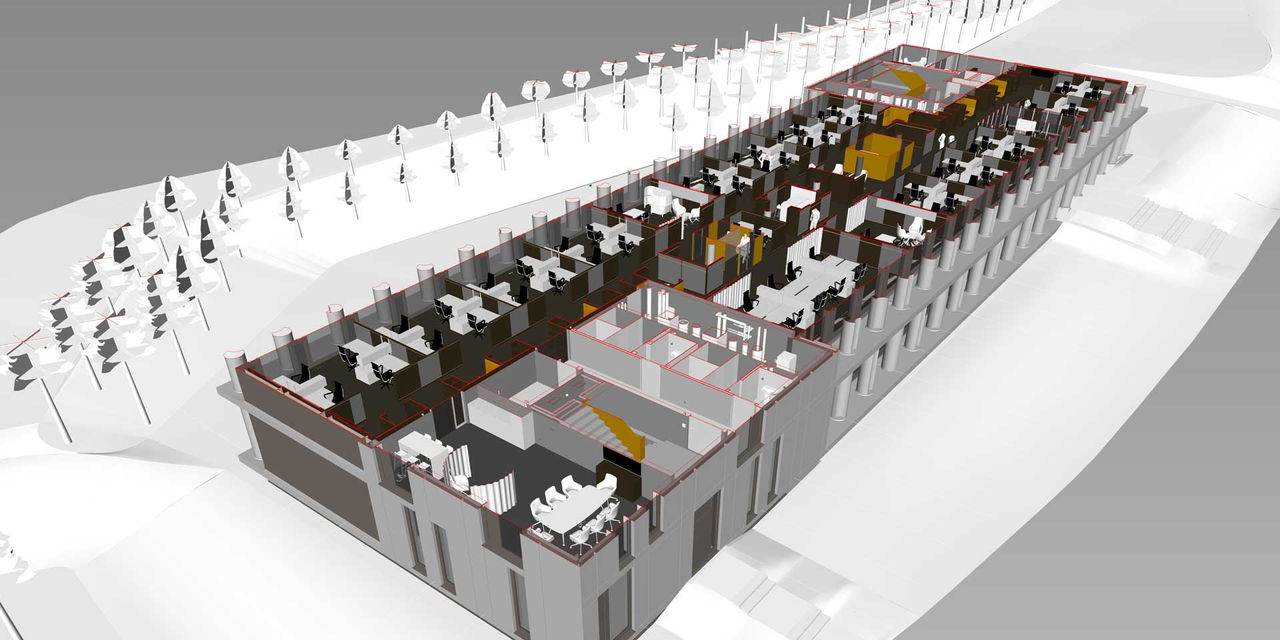
This is where Building Information Modeling (BIM) comes into play. BIM is based on a three-dimensional virtual model with geometric and semantic information.

■ Interoperability and innovation: BIM enables seamless collaboration between all project participants and promotes innovative methods of data sharing.

■ With the help of model-based visualizations and analysis methods, complex sustainability issues are made more tangible for all project participants at an early stage.

Digitale planung

Green BIM at Max Bögl

At Max Bögl, we use Green BIM models to implement sustainability planning throughout the entire project.

Among other things, this is also intended to take account of the Circular Economy Action Plan (CEAP), which was introduced by the EU in 2020 and with which the construction industry is to move away from the linear model of material use (linear economy) and develop into a circular economy over the next ten years. The recycling potential of materials is therefore of particular importance.

n order to be able to map and optimize the circular economy in projects, we have been an innovation partner of Madaster, the "land register of materials", since mid-2022. Madaster enables the model-based determination of the circular economy of buildings by automatically linking construction elements with materials and products. Taking into account the biological and technical life cycle of materials and products leads to a high circularity index and thus to greater sustainability. Madaster also supports compliance with QNG and EU taxonomy requirements and provides information for the DGNB building resource passport.

green bim
BIM