


Intaurus is building for the future with Bögl eco-concrete
May 14, 2025
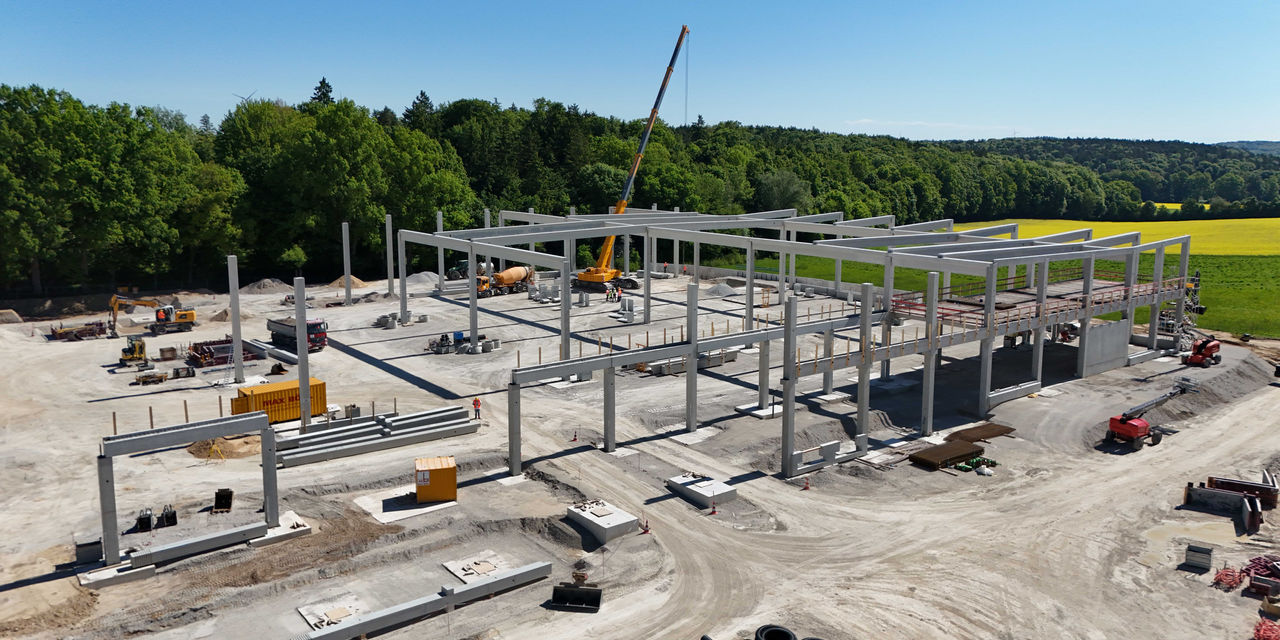
Working in partnership, the Intaurus Group and the Max Bögl Group are currently constructing new modern warehouse, production, and office spaces at their Bavarian site in Denkendorf. For this construction project, Intaurus is using Bögl’s innovative eco-concrete for the first time—a strong signal for sustainable construction in the region and a pioneering move for the industry.
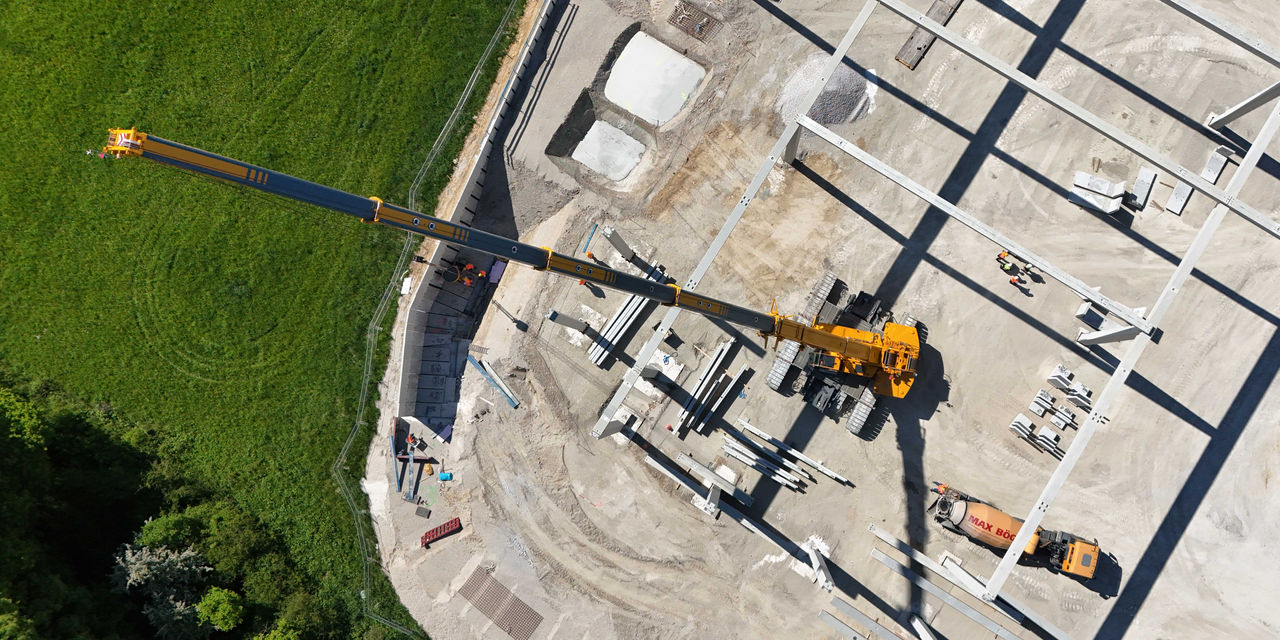
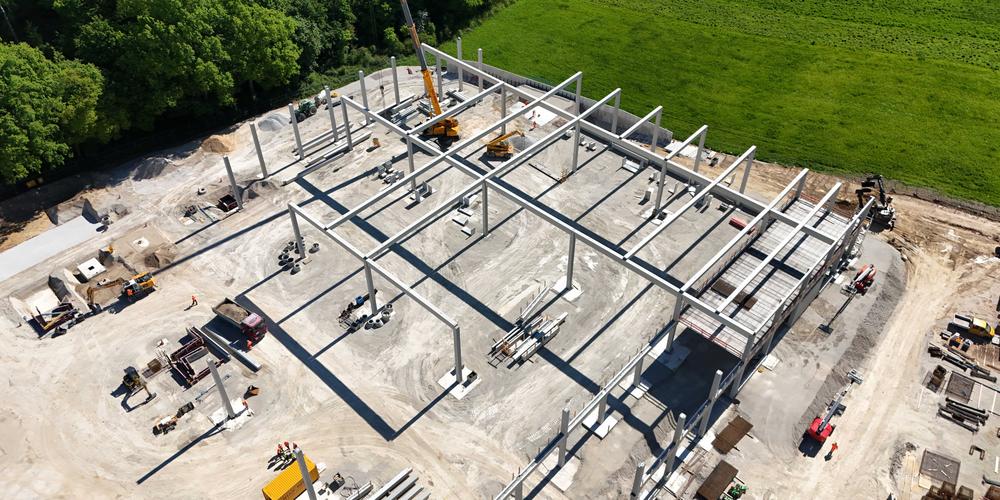
In Denkendorf, near Ingolstadt, directly off the A9 highway, Intaurus is partnering with Max Bögl to develop a forward-looking commercial property that combines sustainability and functionality. The project will feature approximately 11,000 m² of high-quality warehouse and production space, as well as nearly 800 m² of office and common areas. The new building meets the KfW-40 standard, is aiming for DGNB Gold certification, and relies on a key component in its choice of materials: Bögl eco-concrete.
Efficiency Meets Flexibility
The building offers versatile usage options: divisible halls starting at 5,000 m², eleven ramp doors, two ground-level sectional doors, and a spacious canopy ensure efficient logistics processes. The integrated infrastructure for electric mobility also makes the property well-suited for the mobility transition.
Aiming for DGNB Gold
The goal is to achieve DGNB Gold certification to underscore the ambitious sustainability targets. The design was based on a pre-check conducted by Max Bögl in accordance with the DGNB Gold Standard of the German Sustainable Building Council (DGNB).
Construction began in early 2025, with completion scheduled for October 2025. The short distance to the construction site not only saves time but also reduces emissions thanks to shorter travel distances—a clear benefit for the environment.
With this project, Intaurus is strengthening its role as a responsible project developer that views sustainability not as an obligation, but as an opportunity.
Bögl Eco-Concrete: Sustainable Materials, Future-Oriented Concept
The Bögl eco-concrete used in this project is characterized by a reduction in the cement content of up to 70% through the use of substitutes. This makes it particularly sustainable, as cement production is one of the world’s largest sources of CO2 emissions. In addition, Max Bögl places great emphasis on conserving resources—through highly efficient use of materials, optimized construction methods, and particularly low-noise and low-vibration processing of the eco-concrete in the company’s own precast plants. Overall, this project reduces CO2 emissions by approximately 50% compared to conventional concrete, both in the load-bearing structure and in the floor slab.
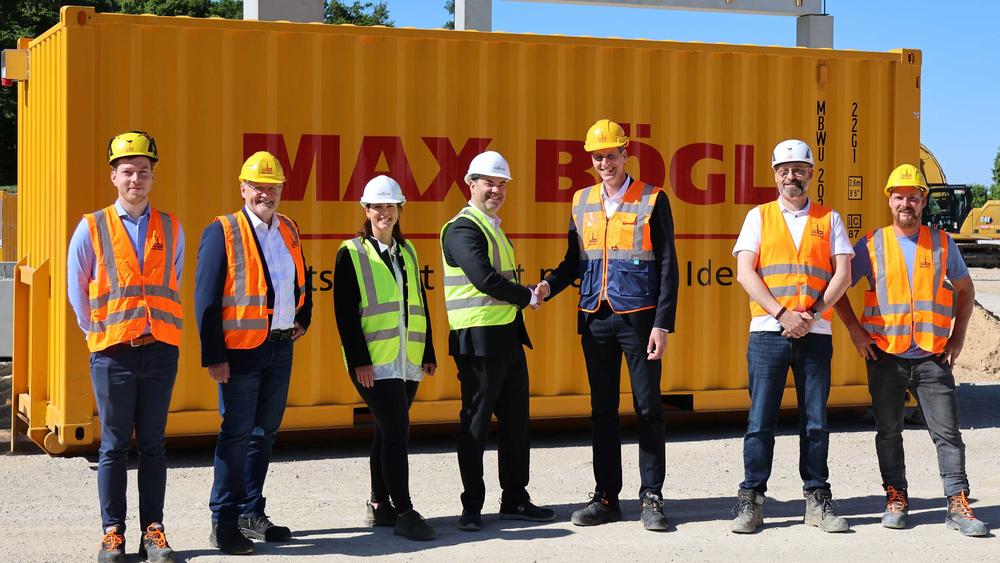
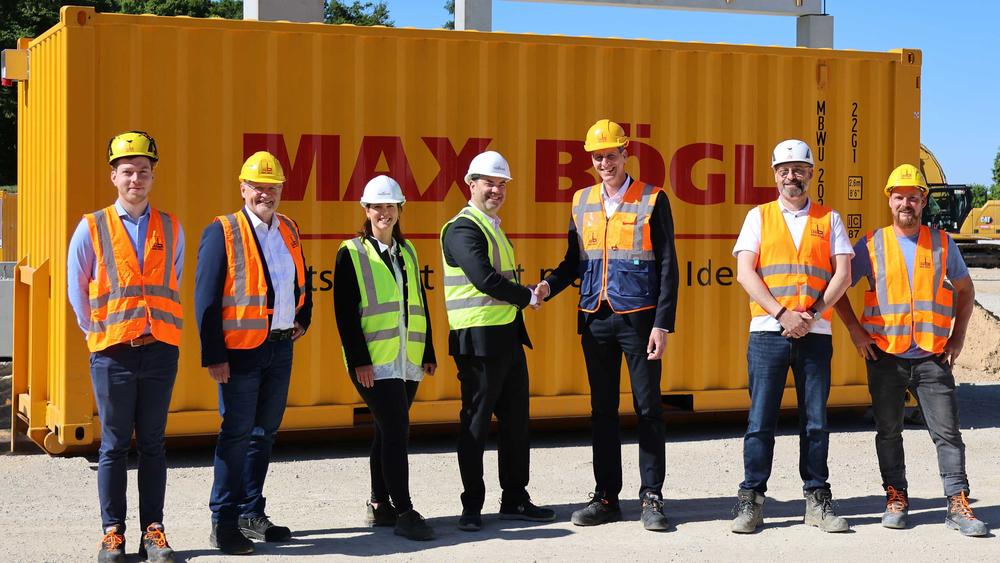
Photo, from left: Fabio Wenk, Sustainability Management, Building Construction, Max Bögl Group; Klaus Lenkheit, Sales, Building Construction, Bavaria, Max Bögl Group; Julia Schweiger, Executive Assistant, intaurus GmbH; Oliver Raigel, Managing Director, intaurus GmbH; Stefan Bögl, Chairman of the Board, Max Bögl Group; Denis Rauert, Project Manager, Building Construction, Max Bögl Group; Marc Aulitzky, Site agent, Building Construction, Max Bögl Group. Photo: Max Bögl Group – Florian Paul