


"KIREL" Research Project – Optimizing Energy Transmission Line Projects Using Artificial Intelligence
February 14, 2025
“KIREL” is the name of a joint initiative between the Max Bögl Group and OTH Regensburg, standing for “AI-based interactive resource planning for earthwork-specific linear construction sites.” The research project, led by Andreas Straßer, BIM coordinator at Max Bögl, and Prof. Dr.-Ing. Mathias Obergrießer of OTH Regensburg, is supported by an economic development grant from the Free State of Bavaria and aims to streamline and optimize the construction process for energy transmission line projects.
Development of an AI-powered digital tool
Given the steadily growing demand for electricity and the expansion of Renewables, the construction of power transmission lines is becoming increasingly important. However, there is a lack of practical experience regarding how projects of this nature and scale can be efficiently managed. The advantage of these infrastructure projects is that they are characterized by repetitive work steps, making them an ideal application for a detailed digital preliminary analysis.
As part of this research project, an AI-supported digital tool will therefore be developed into which specialist planners can input key parameters—such as the dimensions of the construction site and the layout of the access road. Based on these specifications, the system uses artificial intelligence (AI) and parametric simulation models to automatically generate design variants for planning earthwork-specific resources or the most suitable vehicle routes.
Simulation Data for Identifying More Efficient Planning Alternatives
Another focus of KIREL is researching how AI models can be effectively trained using limited but high-quality data. Since conventional AI training requires large datasets, the project is investigating how existing, unstructured data—such as equipment data or synthetic simulation results—can be specifically leveraged.
The AI-supported application is designed to enable users to quickly run through different scenarios, take existing resources into account, identify potential problems early on, and pinpoint more efficient planning alternatives. This digital tool is being developed in close collaboration and consultation with the personnel involved in the execution of work on the site, ensuring the creation of a practical solution.
Quote from State Secretary for Economic Affairs Tobias Gotthardt:
“KIREL is a true project of the future—made in the Upper Palatinate! Max Bögl and OTH Regensburg are impressively demonstrating how artificial intelligence makes construction planning smarter, more efficient, and more sustainable. This is progress that isn’t just conceived—it’s made! I wish all project participants every success in implementing this ambitious endeavor.”
Quote from CEO Stefan Bögl:
“Through this outstanding research project, we will gain important insights into the efficient construction of energy corridors. I am convinced that we will be able to incorporate these findings into many future construction projects. I would like to thank everyone involved in the research project for their dedication!”
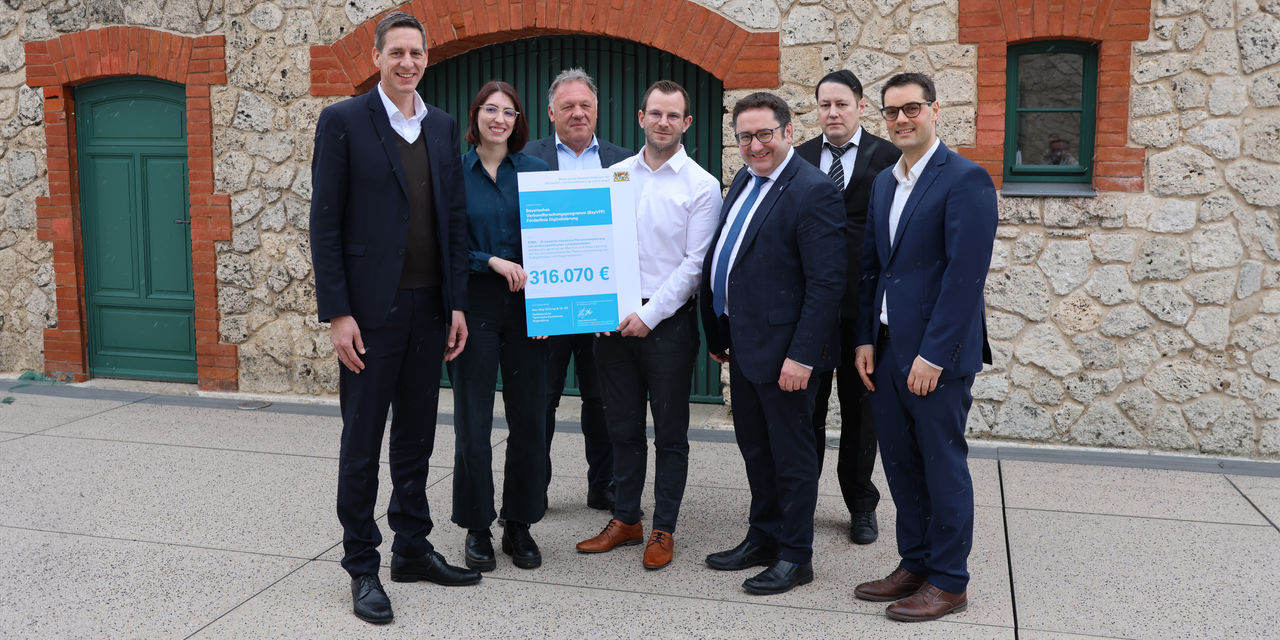
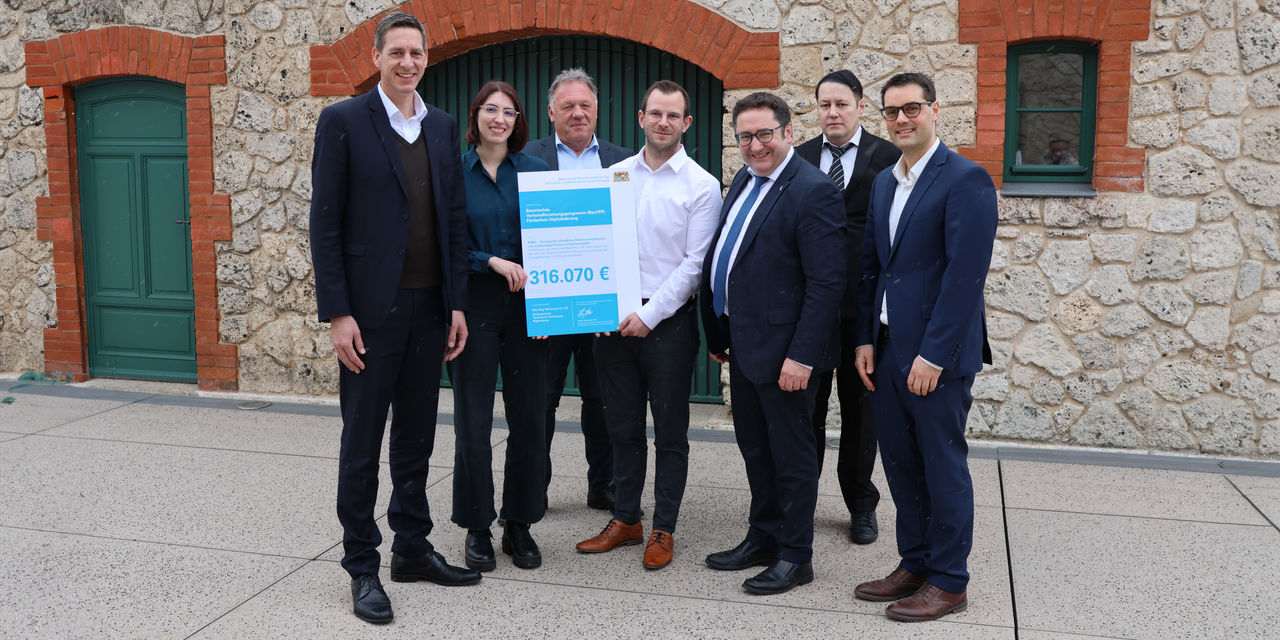
At the presentation of the grant notification, from left: Stefan Bögl, CEO of the Max Bögl Group / Anna-Maria Mehringer, KIREL doctoral candidate / Michael Stahl, Head of the Central Supply and Waste Management Division at Max Bögl / Andreas Straßer, KIREL Project Manager at Max Bögl / Tobias Gotthardt, State Secretary at the Bavarian State Ministry of Economic Affairs, Regional Development, and Energy / Dr. Roland Krebs, Project Manager at VDI/VDE Innovation + Technik GmbH / Prof. Dr.-Ing. Mathias Obergrießer, OTH Regensburg.
Photo credit: Max Bögl Group / Florian Paul